


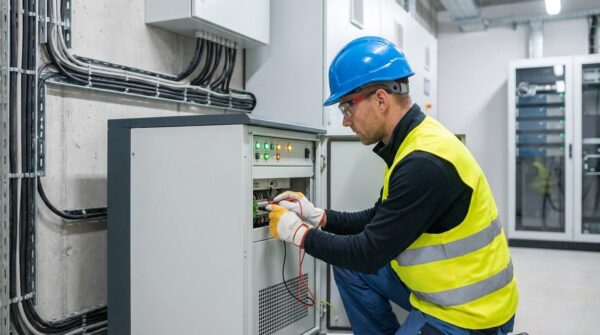


Choosing a professional to manage power infrastructure directly impacts property safety and operational efficiency. Many people assume that a license to work with wires makes any professional suitable for any task, but the industry is divided into distinct specializations. When evaluating a commercial electrical contractor vs. an electrician for your next facility upgrade, it's necessary to understand that the two roles involve different legal liabilities and technical capabilities.
The technical requirements of a warehouse or a shopping center differ vastly from those of a standard residential home. Miscalculating the project needs can lead to significant delays, financial losses, or hazardous conditions that threaten the building's integrity. Understanding the mechanics of these systems is the first step toward hardening your facility's defenses against electrical failure and operational downtime.
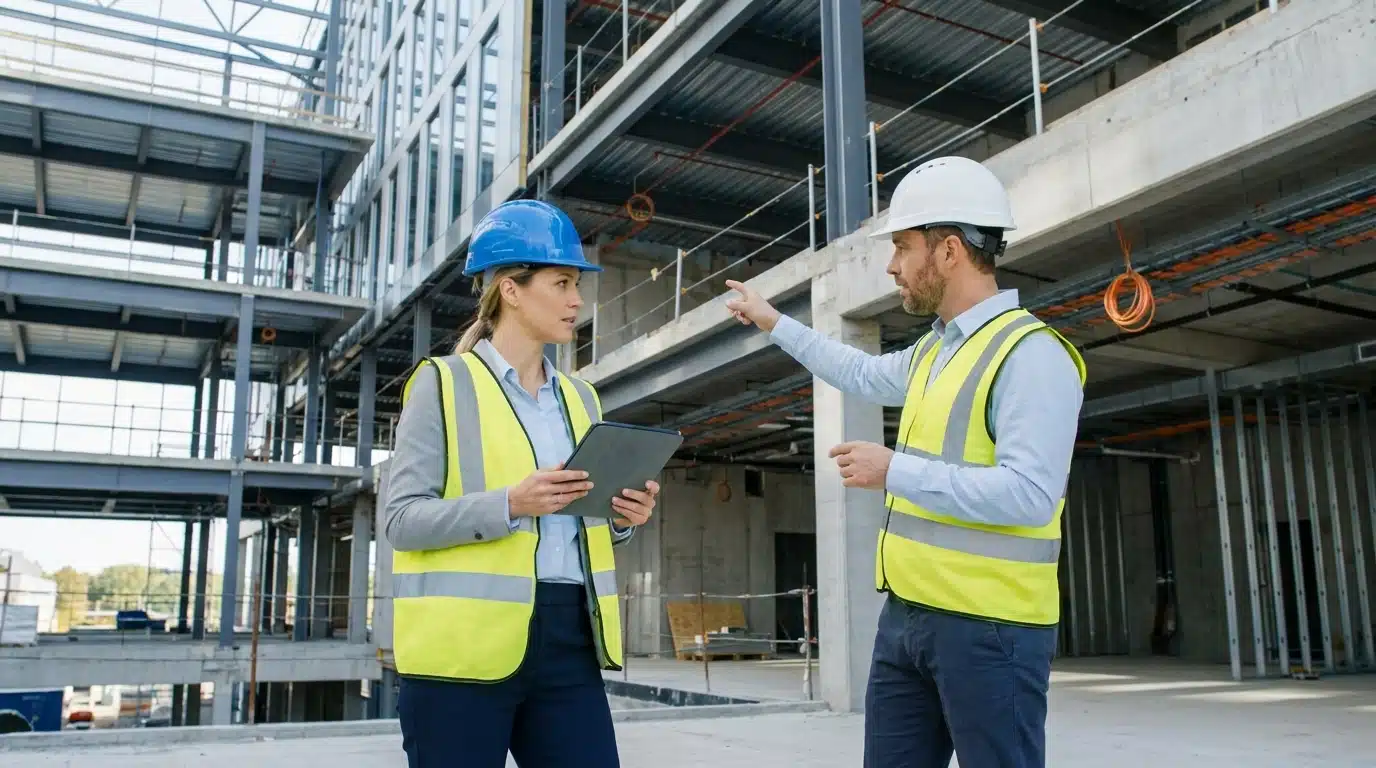
Understanding the Core Roles: Electrician vs. Electrical Contractor
The terms electrician and electrical contractor are often used interchangeably, yet they represent different professional tiers. An electrician is a person trained to perform specific technical tasks and hands-on work. They’re the professionals who actually pull the wire, install the fixtures, and troubleshoot local circuits. Their focus is on executing work within the physical constraints of a specific site.
What Defines a Standard Electrician?
Standard electricians, often referred to as residential electricians, typically spend their days working in single-family homes or small apartment complexes. Their work environment is predictable and typically involves wood-frame construction, with wiring hidden behind drywall. These professionals focus on maintaining the comfort and functionality of a living space through reliable power distribution. You’ll often find them installing ceiling fans, replacing faulty wall outlets, or updating a home’s main breaker panel.
The tools used by a residential specialist are generally portable and designed for accessibility in tight spaces. They rely on hand tools, power drills, and basic voltage testers to complete their daily tasks. Their project scope is usually limited to one or two rooms at a time, and they often work alone or with a single apprentice. Using portable tools allows these specialists to move quickly between different residential calls throughout the day.
Most residential projects follow a standard set of procedures that rarely deviate from common practices. Wiring a new kitchen or adding an outdoor light usually doesn’t require complex engineering or major structural changes. Because a home’s power demands are relatively low, these electricians focus on safety and convenience for the occupants. Their expertise is centered on the National Electrical Code requirements for residential dwellings.
What Defines a Commercial Electrical Contractor?
A commercial electrical contractor is a comprehensive organization designed to manage infrastructure supporting loads exceeding 1,000A. These entities employ specialized teams that include project managers, estimators, and master electricians who coordinate complex installations. Their work is primarily found in the retail, manufacturing, and industrial sectors where power needs are high. They’re responsible for the systems that keep airports, shopping centers, and high-rise office buildings operational.
These firms handle the logistical challenges that come with large-scale construction and industrial retrofitting. Commercial firms do more than fix individual wires. They design and oversee entire electrical distributions that support heavy machinery and high-bay LED systems. Managing widespread site communication requires a high degree of organizational skill to ensure that materials arrive on time and labor is used efficiently. They act as the central hub for all electrical communication on a job site.
The scope of a commercial contractor’s work often involves months or even years of involvement on a single site. They must coordinate with other trades, such as HVAC specialists and plumbers, to ensure the building’s systems don’t interfere with one another. Working in a collaborative environment requires a deep understanding of structural engineering and large-scale architectural plans. Their goal is to build a scalable infrastructure that can grow alongside the business it supports.
An electrical contractor is a business entity or a firm that employs these skilled electricians to carry out large-scale projects. This firm acts as the primary point of responsibility for a project’s completion, legal compliance, and financial management. Suncoast Power designs scalable electrical infrastructure for diverse business sectors across Florida. While the contractor provides the organizational framework and insurance, the electricians provide the labor required to meet the project goals.
Business owners must distinguish between the person doing the work and the organization that guarantees it. Choosing between an individual professional and a contracting firm often depends on the scale of the required work. A single electrician might be perfect for a small office repair, but they likely lack the resources to handle a complete system overhaul. Contracting firms bring a level of professional engagement that includes project management and legal accountability.
Maintaining a corporate organizational structure ensures that large projects remain on schedule and within the bounds of local regulations. Individual electricians focus on technical accuracy, while contractors manage the broader business logistics. You should verify that the entity you hire has the capacity to support your specific operational needs. Understanding this hierarchy helps you allocate your construction budget more effectively.
Project Scope and Capacity Differences
The sheer size of a project is often the most obvious difference between these two professional roles. A residential electrician’s scope is usually limited to a single property with a defined set of needs. They work in a relatively small area where the impact of their work is confined to a few rooms. Their capacity is tied to their personal labor and the simple tools they carry in their service van.
Commercial contractors operate on a much broader scale, managing dozens of electricians across multiple job sites. They have the logistical capacity to handle everything from a small retail build-out to the construction of a distribution center. Operating at scale provides the capacity to source bulk materials, coordinate heavy machinery, and manage large-scale timelines. Their focus is on the successful completion of a complex system that involves thousands of individual components.
Project managers at contracting firms use specialized software to track labor hours and material deliveries in real time. Maintaining rigorous oversight is necessary for keeping multi-million-dollar projects on track. They must also manage complex vendor relationships to ensure that specialized equipment arrives exactly when it’s needed. Mastering logistics prevents the sequential scheduling conflicts involving HVAC and framing trades that often plague poorly managed jobs.
Capacity also refers to the financial ability to cover a project’s costs before the final payment is issued. Commercial contractors maintain large lines of credit to purchase materials in bulk and pay their crews weekly. An individual electrician may require frequent draws or upfront payments to keep a project moving. Selecting a partner with deep financial resources provides a safety net for your development project.
The Journey to Commercial Expertise
While every electrical career begins with a foundation of basic theory and safety, the paths for residential and commercial professionals soon diverge. Commercial work demands a significantly more rigorous training schedule due to the higher voltages and complex systems involved. The state mandates these advanced requirements to ensure the safety of the public and the workers. While standard training covers basic wiring, commercial electrician qualifications require additional mastery of high-voltage distribution and industrial safety protocols.
The path to becoming a master electrician usually starts with a combination of trade school and a formal apprenticeship. During this time, an apprentice works under the direct supervision of a licensed journeyman to learn the basics of the trade. They spend thousands of hours practicing wire pulling, pipe bending, and circuit testing in various environments. After completing the required apprenticeship hours, the individual can take a licensing exam to work independently.
Commercial contractors in Florida must meet specific requirements that go beyond individual electrical skills. To become a certified electrical contractor, an applicant must show at least four years of experience in a leadership role. Candidate experience must include time spent as a foreman, supervisor, or contractor within the eight years before the application. This ensures that the person leading the firm has a proven history of managing teams and large projects.
Beyond the basic contractor license, commercial specialists often pursue advanced certifications in industrial safety and specialized equipment. They must be experts in NFPA 70E standards, which cover electrical safety in the workplace and arc flash protection. These certifications are required for working on high-voltage equipment that could cause serious injury if handled incorrectly. Businesses rely on these credentials to verify that a contractor can manage the risks associated with an industrial site.
State Licensing and Regulatory Authority
In Florida, the Department of Business and Professional Regulation (DBPR) oversees the Electrical Contractors’ Licensing Board. This board sets the standards for both Certified Electrical Contractors, who can work anywhere in the state, and Registered Electrical Contractors, who are limited to specific jurisdictions. Verifying a contractor’s standing through the DBPR portal ensures they meet the statutory requirements for workers’ compensation and financial stability.
Low-Voltage Systems and Data Cabling Convergence
Modern commercial projects now require the integration of fiber optics, security systems, and high-speed data networks alongside traditional power systems. Commercial contractors manage this convergence by employing technicians specialized in low-voltage wiring and its unique installation requirements. Employing specialized technicians ensures that a building’s communication backbone is as robust as its power distribution. Integrating these systems during the initial build phase prevents the need for expensive retrofits later.
Data cabling involves more than just pulling CAT6 or fiber optic lines through a ceiling. It requires a deep understanding of how a network operations center works and how to organize complex server rooms. Commercial firms design these systems to minimize electromagnetic interference from high-voltage lines. Achieving technical precision is necessary for maintaining high data speeds and system reliability in a busy office environment.
Security system integration is another major component of the modern commercial electrical scope. Contractors install and program CCTV cameras, access control card readers, and advanced fire alarm systems. These systems must often be integrated into a central building automation platform for streamlined management. Professional contractors provide a single point of accountability for all technical infrastructure, reducing the owner’s coordination burden.
Specialized Commercial Environments
High-stakes environments like hospitals and airports require a level of technical expertise that standard electricians rarely possess. Hospitals rely on redundant emergency power systems and isolated grounding to keep life-saving equipment operational during a blackout. A commercial contractor must understand the strict regulatory codes governing these healthcare facilities. One small error in a medical environment can lead to equipment failure or patient safety risks.
Airports present unique challenges involving ground lighting systems and high-density terminal power requirements. These projects often involve working around active runways and secure areas, requiring strict background checks and safety clearances. Commercial firms have the administrative structure to manage these security protocols while delivering complex infrastructure. They also design systems that can handle the massive electrical surges common in transportation hubs.
Industrial manufacturing plants require specialized motor controls and heavy-duty power drops for production lines. Contractors in these environments must be proficient in working with large-scale switchgear and liquid-filled transformers. They design power layouts that optimize efficiency and reduce the risk of machine downtime. This specialized knowledge ensures that the facility can meet its production goals without electrical interruptions.
Arc Flash Hazards and Mitigation
Commercial contractors perform arc flash assessments to determine the incident energy level at various points in an electrical system. These studies determine the appropriate Personal Protective Equipment (PPE) requirements for technicians working on energized equipment. Implementing an arc flash mitigation strategy protects personnel from the intense heat and pressure released during an electrical fault.
Residential vs. Commercial Environments: Technical Disparities
The specialized education and certifications mentioned previously are directly applied to the technical challenges of industrial environments. In a residential setting, the focus is on aesthetics and the low-power needs of household appliances. The building materials are usually combustible wood, which influences how wires are protected and routed. Commercial environments, however, are built with steel, concrete, and cinderblocks to withstand industrial use.
Technical disparities extend to the way power is delivered and managed throughout the structure. Residential systems are designed for simplicity and ease of use for the homeowner. Commercial systems are built for durability, high capacity, and continuous operation under heavy loads. An electrician trained only in residential methods would find the infrastructure of a manufacturing plant completely foreign.
Safety ratings for commercial equipment are also much higher to account for the energy levels present. Circuit breakers in these environments must have a high interrupting capacity (kAIC) to safely clear a fault without exploding. Residential panels are not designed to handle the massive short-circuit currents found in industrial distribution. Matching the equipment rating to the environment is a necessary step for building safety.
Single-Phase vs. Three-Phase Power Systems
Standard homes operate on single-phase power, which typically consists of two hot wires and a neutral wire. Single-phase power provides 120V for standard outlets and 240V for heavy appliances like dryers and ovens. It’s an efficient way to power a household’s daily needs without requiring complex equipment. Most residential electricians spend their entire careers working exclusively within this single-phase framework.
Commercial and industrial facilities require three-phase power to operate heavy machinery and large-scale HVAC systems. Three-phase power systems provide non-pulsating energy to industrial machinery. Delivering power constantly makes the system more efficient for starting large motors and running high-capacity equipment without causing power surges. It allows businesses to run more machinery using less electricity, which can reduce long-term energy costs.
The density of three-phase power makes it the standard for any environment with high-demand loads. It requires specialized transformers and heavy-duty switchgear to manage the distribution of electricity. Commercial contractors must understand how to balance the loads across all three phases to prevent system imbalances. An imbalanced three-phase system can lead to equipment failure and expensive energy waste.
Wiring Materials and Protection: Type NM-B vs. Conduit
In residential wiring, the most common material is Type NM-B, better known as Romex. This cable consists of insulated wires wrapped in a flexible plastic sheath, making it easy to pull through wooden studs. Type NM-B is cost-effective and safe when hidden behind the protective barrier of a home’s drywall. However, its flexibility makes it vulnerable to physical damage when left exposed.
Commercial buildings rarely use wood framing, opting instead for steel studs or cinderblock walls. In these environments, using Type NM-B is often illegal because the wiring is frequently exposed to physical hazards. Metal conduits protect electrical conductors in high-traffic environments. Commercial contractors must use metal conduits, such as EMT, to create protective raceways that shield against impacts and moisture.
Installing conduit requires a different set of skills, including the ability to bend metal pipes with precision to fit the building’s layout. This ensures that the wiring remains organized and protected even in high-traffic areas. The use of metal conduit also provides an extra layer of fire protection by containing sparks in the event of a short circuit. It’s a more labor-intensive process, but it’s required for the longevity of a commercial facility.
Voltage Demands and Infrastructure Scale
Residential homes generally function on a standard 120V or 240V service. This is enough to power lights and kitchen appliances without stressing the local grid. The infrastructure involved is relatively small, consisting of a single meter and a breaker panel with a few dozen circuits. It’s a localized system that’s easy to map and maintain over the life of the home.
Large commercial buildings often operate on much higher voltages, such as 208V, 277V, or 480V. These higher voltages allow the building to move large amounts of power over long distances with less heat loss. Managing 480V systems requires specialized equipment, such as step-down transformers, to bring the power to a usable level for office equipment. Commercial infrastructure includes massive switchgear rooms and complex distribution networks that span entire city blocks.
Commercial contractors must use specialized testing equipment to ensure these systems operate within their design parameters. The sheer volume of energy moving through these buildings demands a level of precision that residential work doesn’t require. They also use infrared thermography and circuit analyzer technology to assess the system’s health. Adopting a preventive approach is necessary to avoid catastrophic failures in high-voltage environments.
Planning, Blueprints, and Engineering Complexity
Before a single wire is pulled on a commercial site, hundreds of hours go into the planning and engineering phase. Commercial contractors must be proficient in reading one-line diagrams, which are technical schematics that show how power flows through a system. They work closely with electrical engineers and architects to ensure the design meets the building’s specific needs. Professional electrical contractor estimating should include a line-item breakdown of specialized equipment, such as VFDs and switchgear.
In contrast, residential work often relies on much simpler diagrams or “on-the-fly” troubleshooting for repairs. While a new home construction will have an electrical plan, it’s usually much less complex than a commercial blueprint. A residential specialist might decide where to place outlets based on standard room layouts. Rigid code requirements and the technical needs of industrial machinery dictate commercial placement.
The engineering complexity of a commercial project also involves calculating load requirements for specialized equipment. Contractors must account for the power draw of industrial motors, massive refrigeration units, and complex server rooms. These calculations ensure that the main service entry is sized correctly and that the building won’t suffer from frequent outages. Engineering proactivity is what keeps a business running smoothly without interruption.
Specialized Equipment and Machinery
Commercial electrical work requires a fleet of specialized equipment that a standard electrician rarely needs. You’ll often see commercial contractors using bucket trucks to reach high-altitude lighting or scissor lifts to work in warehouse ceilings. These tools are necessary because commercial buildings often have ceilings that are 20 to 40 feet high. Having this equipment on hand allows the team to work safely at heights that would be impossible with a ladder.
Contractors also use high-tech diagnostic tools such as infrared thermography cameras. These cameras allow them to see heat signatures in electrical panels, identifying loose connections before they fail. Using thermal imaging is standard in the commercial world, but it is rarely used in residential service calls. It provides a non-invasive way to check the health of a massive electrical system.
The investment in this machinery is significant, which is why it’s usually only found in the hands of established contracting firms. Standard electricians may rent this equipment for occasional use, but they don’t typically own or operate it on a daily basis. For a commercial client, a contractor who owns their equipment is a sign of stability and readiness. It means the project won’t be delayed while the team waits for a rental to be delivered.
Safety Standards and Regulatory Compliance
Safety is the highest priority in the electrical industry, but the standards for commercial work are far more stringent. Because these sites involve higher voltages and high occupancy, the potential for a major accident is much greater. Regulatory bodies like OSHA and the NFPA have developed rigorous guidelines to protect workers and the public. A commercial contractor must embed these safety protocols into every aspect of their daily operations.
Regulatory compliance isn’t just about following rules; it’s about managing risk for the property owner. A contractor who fails to meet these standards can face massive fines and legal challenges that could shut down a project. Their reputation and their ability to stay in business depend on a perfect safety record. Commercial electrical contractors must understand and comply with stricter building codes and safety regulations.
One of the most important protocols in the commercial world is Lockout/Tagout, or LOTO. This procedure ensures that machinery and electrical circuits are completely powered down and locked before anyone begins work on them. It prevents the accidental energization of equipment that could lead to electrocution or mechanical injury. In a busy industrial environment, LOTO is a required practice that saves lives every single day.
When to Request a Quote from a Commercial Electrical Contractor
Recognizing when a project requires a specialized firm can save your business from costly errors and safety violations. If your facility uses three-phase power or handles high-demand manufacturing loads, you need a commercial specialist. You should also seek a professional bid when your project involves specialized environments, such as hospitals or airports. These complex systems require a team capable of effectively managing a commercial electrical maintenance contract.
Business owners should also contact a contractor during a “Change of Use” scenario. This occurs when you buy a retail space and plan to convert it into a restaurant or a manufacturing hub. A commercial contractor will conduct a specific inspection to ensure the current infrastructure can handle the new power demands. The conversion checklist includes verifying transformer capacity, checking for proper grounding, and evaluating the condition of the main switchgear.
Retrofitting an older building with modern technology is another clear sign that you need a commercial specialist. They can provide detailed estimates for industrial electrical retrofits and energy-efficiency upgrades. They also perform commercial electrical load calculations to ensure your new machinery doesn’t trip the main breaker. Hiring the right professional from the start protects your investment and ensures your facility is ready for growth.
Insurance, Bonding, and Risk Management
The financial risks associated with electrical work are immense, making insurance a non-negotiable part of the industry. A commercial contractor carries coverage that far exceeds what a typical residential electrician might have. Business owners should prioritize hiring commercial electrical contractors who maintain high-limit liability insurance and have a documented history of project bonding. High-limit coverage is not just for the contractor’s benefit. It serves as a form of protection for the business owner.
Risk management also involves using performance and payment bonds to guarantee the quality and completion of work. These financial instruments serve as a third-party guarantee that the contractor will fulfill its obligations. For a business owner, hiring a bonded contractor is the only way to truly protect their investment. It provides peace of mind that the project will be completed in accordance with the agreed-upon terms.
In regions like the Florida Suncoast, specific codes related to coastal corrosion and hurricane-force winds also come into play. Electrical equipment installed outdoors must be able to withstand salt air and high-velocity moisture. A seasoned commercial contractor knows exactly which enclosures and mounting methods are required to meet these local standards. Applying local expertise ensures that the facility remains powered even during severe Florida weather events.
Long-Term Maintenance and Energy Efficiency
A commercial electrical contractor provides ongoing support through preventive maintenance programs designed to ensure business continuity. Adopting a proactive management style keeps your company competitive and operational. These programs include regular thermal imaging scans to find “hot spots” in electrical panels before they fail. They also test backup power systems, such as generators, to ensure they are ready for the next Florida storm.
Energy efficiency upgrades are another way contractors help businesses lower their monthly utility bills. They install Power Factor Correction equipment to reduce wasted energy and improve the performance of large motors. They also implement Smart Metering Systems that allow facility managers to track power usage in real time. These technical solutions often pay for themselves through energy savings in just a few years.
Transitioning to modern LED lighting systems is one of the most common upgrades for commercial facilities. These systems use significantly less power than traditional bulbs and require much less frequent maintenance. Contractors also integrate automated building controls that manage lighting and HVAC based on occupancy. These complex integrations require a deep understanding of both electrical systems and digital communication protocols.
Partner with Suncoast Power for Expert Commercial Electrical Solutions
The technical and logistical gap between a standard electrician and a commercial electrical contractor is significant. Commercial projects require a level of insurance, licensing, and technical expertise that goes beyond the capabilities of a standard residential electrician. Choosing the right partner is an investment in the long-term safety, efficiency, and scalability of your business operations. Suncoast Power has 40 years of experience in Florida, ensuring your project is handled with precision and professional oversight.
Our expertise ensures that your electrical systems are designed, installed, and maintained to the highest standards of safety and performance. We possess all the qualifications discussed in this article to keep your warehouse, retail space, or manufacturing plant running reliably. Contact Suncoast Power today to discuss your next commercial project or schedule a maintenance audit.