


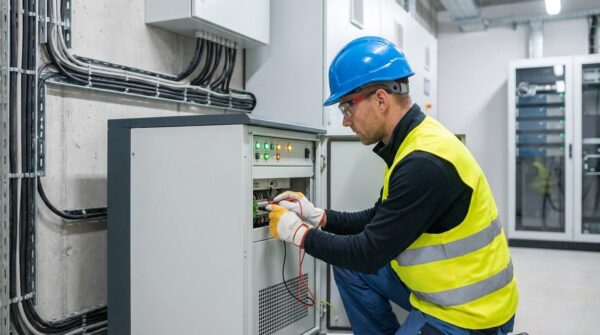


Electrical infrastructure often remains forgotten behind drywall and ceiling tiles until a failure occurs. The aging commercial building stock presents a growing concern for property managers and owners alike. While exterior renovations keep structures looking current, the internal wiring often reaches its physical limit without notice.
The copper and aluminum components that power these buildings have a definitive operational lifespan that must be respected. Neglecting these systems puts business continuity and occupant safety at risk of fire or failure. Understanding the mechanics of these systems is the first step toward hardening your facility's defenses against electrical fire hazards.
The Science of Material Degradation in Electrical Components
Electrical aging involves complex physical and chemical changes that occur within a building’s power distribution network. These processes result from a combination of constant thermal stress, environmental exposure, and chemical breakdown over several decades. Understanding these mechanisms helps technicians identify where failures are most likely to originate in older facilities.
Understanding Wire Insulation Breakdown and PVC Embrittlement
Thermoplastic and rubber insulation types used in commercial wiring experience significant stress over their long lifecycles. Decades of constant heating and cooling cycles cause the plasticizers in PVC to leach out over time. The resulting loss of flexibility makes the material brittle and prone to flaking off the metal conductor.
Once the insulation becomes compromised, the copper or aluminum core becomes exposed to the surrounding environment and structural materials. The breakdown of these materials significantly increases the risk of commercial electrical fires within the building envelope or ceiling spaces. Faulty wiring accounts for approximately 51% of electrical fires in residential buildings, according to NFPA data. While these statistics are based on residential data, the underlying physics of wire degradation remains consistent in commercial environments.
Exposed conductors create the perfect conditions for arcing between wires or between wires and grounded surfaces. Arcing generates extreme temperatures exceeding 35,000 degrees Fahrenheit that can instantly ignite nearby dust, insulation, or wooden structural members.
Knob and tube wiring is one of the oldest methods and was common in buildings until the 1930s. The cloth insulation used in these systems is more prone to deterioration and cannot withstand high temperatures caused by increased loads. Modern low-voltage wiring utilizes better PVC insulation, but even these materials have limits. Regular inspections are necessary to ensure the building envelope remains safe from these deteriorating materials.
Mechanical and Thermal Fatigue in Connection Points
Mechanical fatigue occurs when connection points are subjected to repeated thermal expansion and contraction over decades. Every time a high-demand piece of equipment starts up, the metal wires heat up and slightly expand. When the equipment turns off, the metal cools and contracts, which can eventually loosen terminal screws and lug connections.
Oxidation and Corrosion in Commercial High-Voltage Environments
Metal conductors react with oxygen and moisture in the atmosphere, leading to surface oxidation. Copper oxidation usually forms a thin layer that remains relatively conductive, whereas aluminum behaves very differently. High-voltage systems operating at 208V, 277V, or 480V are particularly susceptible to the heat generated by increased resistance at oxidized points.
The Impact of Florida’s Climate on High-Voltage Systems
In the humid coastal environments of Florida, the corrosive process accelerates significantly compared to properties in drier climates. Salt air acts as a catalyst for galvanic corrosion, especially when different types of metals are joined together. This corrosive reaction is common in older panels where copper wires might be connected to aluminum bus bars without proper antioxidant paste.
Humidity also contributes to the breakdown of insulation resistance, allowing current to leak into grounded conduits. Stray current leakage generates heat and can trigger nuisance tripping of breakers or, more dangerously, provide enough energy to start a fire. Proper maintenance includes checking for signs of corrosion on all main distribution components.
Coastal properties must adhere to specific maintenance schedules to mitigate the effects of salt spray on outdoor equipment. Transformers and switchgear located near the ocean often show signs of pitting and surface degradation much sooner than equipment located inland. The harsh coastal environment makes regular electrical maintenance essential for long-term facility safety. Ignoring these local environmental conditions increases the likelihood of a sudden, costly system failure.
Aluminum vs. Copper Risks in Older Structures
Aluminum wiring was a common substitute for copper wiring in buildings constructed between 1965 and 1973. Research from the CPSC shows that a building with aluminum branch circuits from this era is 55 times more likely to have a connection reach fire hazard conditions than one wired with copper.
The primary issue with aluminum is its higher rate of thermal expansion compared to copper. The rapid expansion of the metal causes connections to loosen more quickly, leading to the same thermal runaway scenarios mentioned previously. When aluminum oxidizes, the resulting layer is an insulator rather than a conductor, which rapidly increases resistance and heat. Most insurance providers now require specific remediation for aluminum circuits to maintain property coverage.
Common Warning Signs of Potential Electrical Ignition Points
Facility managers should pay close attention to the daily performance of their electrical systems to spot trouble early. Minor symptoms are often dismissed as routine maintenance nuisances rather than serious hazards to the property. Most electrical fires are preceded by subtle indicators of systemic failure, suggesting the wiring has reached its limit.
Persistent Flickering Lights and Power Fluctuations
Persistent flickering or dimming lights often suggest a loose neutral wire or a failing distribution panel connection. These fluctuations indicate that the voltage is not remaining stable across the specific circuit under load. Consistent dimming when heavy equipment starts up is a clear sign that the infrastructure is struggling to support the demand.
Modern LED lighting technology can sometimes mask these power fluctuations, as internal drivers smooth out voltage drops. The stability of LED drivers makes it more difficult for staff to detect signs of aging in commercial wiring through visual inspection alone. Professional testing is required to identify the underlying instability before it escalates into a larger emergency. If your lights flicker constantly, it’s time to investigate your primary distribution lines.
Unusual Odors and Physical Discoloration of Outlets
Overheating electrical components often produce a distinct burning plastic scent in the air. The pungent odor occurs when terminal blocks and wire insulation reach their melting point and begin to off-gas. If you detect this smell near a wall or panel, it’s a sign that a fire risk has reached a critical stage.
Physical discoloration on outlets or switch plates is another immediate cause for concern in a commercial setting. Any charring or yellowing of the faceplate indicates that the internal temperature has exceeded safe limits. These visible marks signify that the component is already failing and requires immediate professional replacement to ensure safety.
Excessive Heat and Audible Buzzing from Electrical Panels
A healthy electrical panel should operate silently and remain cool to the touch during normal use. Any audible buzzing or humming indicates that internal components are vibrating under high load or are loose. These vibrations can cause mechanical fatigue and eventual failure of the internal breaker mechanism.
Panels that feel warm to the hand suggest that the internal bus bars are operating beyond their safe thermal limits. Excessive thermal energy is often a result of overloaded circuits or poor connections within the panel itself. High temperatures can cause breakers to malfunction and fail to trip during a short-circuit event. It’s important to monitor panel temperatures during peak operating hours when the load is highest.
Continually tripping breakers are a primary indicator that the system is no longer adequate for the building’s current needs. If a panel has reached the end of its service life, it may no longer protect the downstream wiring. Ignoring these mechanical warnings often leads to catastrophic failure of the entire distribution system.
The Danger of Outdated Breaker Technology and Obsolete Panels
Circuit breakers serve as the primary safety mechanism for any commercial or industrial building. Older technology often lacks the sensitivity and mechanical speed required to protect modern electronics from surges. As internal components age, the likelihood of a mechanical failure within the breaker increases significantly.
Why Federal Pacific Electric (FPE) and Zinsco Panels Pose Significant Risks
Federal Pacific Electric Stab-Lok and Zinsco panels represent some of the most significant risks in older properties. These specific brands are known for a no-trip phenomenon where the breaker fails to cut power during an overload. A failure to trip essentially turns the building’s wiring into a massive heating element that can ignite a fire.
Insurance companies and fire marshals frequently require the immediate replacement of these outdated commercial breakers to maintain coverage. Their design flaws allow for internal arcing and overheating that can go completely unnoticed until a fire breaks out. Many professional contractors refuse to perform minor repairs on these panels because of their inherent dangers. Replacing these units is often the only way to ensure the facility’s safety.
The mechanical components inside these obsolete panels can seize up over decades of inactivity in the building. When a short circuit occurs, the breaker stays closed, allowing current to flow unchecked through the system. The absence of overcurrent protection is a leading cause of total loss fires in older commercial structures. Owners should prioritize removing these specific brands to mitigate measurable voltage drops and current leakage.
The Limitations of Old-Style Fuses in Modern Commercial Applications
Legacy fuse boxes were common in commercial applications until the early 1960s, but are now considered obsolete. These systems are beyond their useful service life and cannot handle the complex loads of today’s equipment. Fuses lack the precision of modern magnetic-thermal breakers and offer less protection against minor overloads.
A dangerous practice known as over-fusing often occurs when tenants experience frequent power interruptions. A higher-rated fuse is installed to prevent blowing, which removes the system’s ability to protect the wires. Over-fusing allows the copper to reach temperatures high enough to melt the insulation without ever breaking the circuit. Improper fuse sizing turns a safety device into a fire hazard.
Modern office and industrial equipment create non-linear loads that legacy fuses weren’t designed to support properly. These systems often lead to constant outages and increased wear on connected devices throughout the facility. Replacing these panels is a necessary step for ensuring modern safety and operational reliability for your business. It’s better to invest in a modern panel than to risk a fire from an outdated fuse system.
Evaluating External Stressors on Aging Commercial Wiring
Electrical systems do not exist in a vacuum and are influenced by how a building is used every day. Changes in business operations and environmental factors can accelerate the degradation of even the best-installed wiring. Understanding these external pressures helps in predicting where risks might develop before they become hazardous.
Increased Electrical Load Demands from Modern Technology
Modern technology has created a phenomenon known as load creep in older commercial buildings. Servers, high-efficiency HVAC units, and electric vehicle charging stations demand more power than original designers envisioned. The disparity between supply and demand creates constant stress on wiring that was never intended for such high capacity.
Running an aged system at 80% or 90% of its maximum capacity for extended periods causes circuit fatigue. Circuit-fatigue heat accelerates the degradation of every component in the electrical path from the panel to the outlet. Old wiring is often rated for lower amperage than is required by contemporary business equipment. You might need to learn how to improve energy efficiency to reduce the strain on your aging system.
The result of this overloading is persistent overheating and eventual breakdown of the wire’s integrity. Overloaded circuits are a primary cause of electrical fires in facilities that haven’t updated their infrastructure. Investing in more robust distribution systems is necessary to keep up with current technological demands. Modernizing your distribution network ensures that your facility can grow without risking a localized fire.
Impact of Rodents and Pests on Hidden Infrastructure
Rats, mice, and squirrels often take up residence in the ceilings and wall cavities of older warehouses. These pests have a habit of chewing on wire insulation, exposing the bare metal conductors to the air. Gnawed insulation creates hidden faults that are nearly impossible to detect through a visual inspection of the building.
Exposed copper can smolder for hours inside a wall before eventually erupting into a structural fire. Older buildings often have compromised envelopes that allow these animals easier access to the hidden infrastructure. Regular pest control and professional electrical inspections are the only ways to effectively mitigate this specific fire risk.
Older properties often still contain knob and tube wiring, which is particularly vulnerable to pest damage. The cloth covering is easy for rodents to strip away, leaving the energized conductors completely bare. The vulnerability of cloth insulation underscores the importance of verifying the integrity of any wiring that hasn’t been updated in several decades.
The Role of Energy Efficiency Upgrades in Fire Prevention
Transitioning to modern, high-efficiency equipment is one of the most effective ways to lower the temperature of an aging electrical system. By reducing the overall demand on the wiring, you decrease the thermal stress on brittle insulation and loose connections. Investing in efficiency saves money on utility bills while simultaneously hardening the building against fire risks.
LED lighting is a primary example of how efficiency improves safety. These fixtures draw significantly less amperage than traditional fluorescent or HID lighting systems. Lower current flow means less heat generation within the conduits and junction boxes throughout the facility. Upgrading to LED retrofits can breathe new life into a system operating near its maximum capacity.
High-efficiency motors and Variable Frequency Drives (VFDs) also contribute to a cooler operating environment. These devices prevent large current spikes during equipment startup, which reduces the mechanical stress on breakers and terminals. By smoothing out the power demand, you prevent the rapid heating and cooling cycles that cause connections to loosen over time. Efficiency upgrades act as a form of preventative maintenance for the entire infrastructure.
Advanced Diagnostic Tools for Detecting Hidden Fire Risks
Professional electrical inspections go far beyond what the human eye can see during a walkthrough. Specialized diagnostic tools allow technicians to identify hidden fire risks before they manifest as a catastrophe. These advanced methods provide the data needed for a proactive maintenance strategy that protects your facility.
The Role of Infrared Thermography in Preventive Maintenance
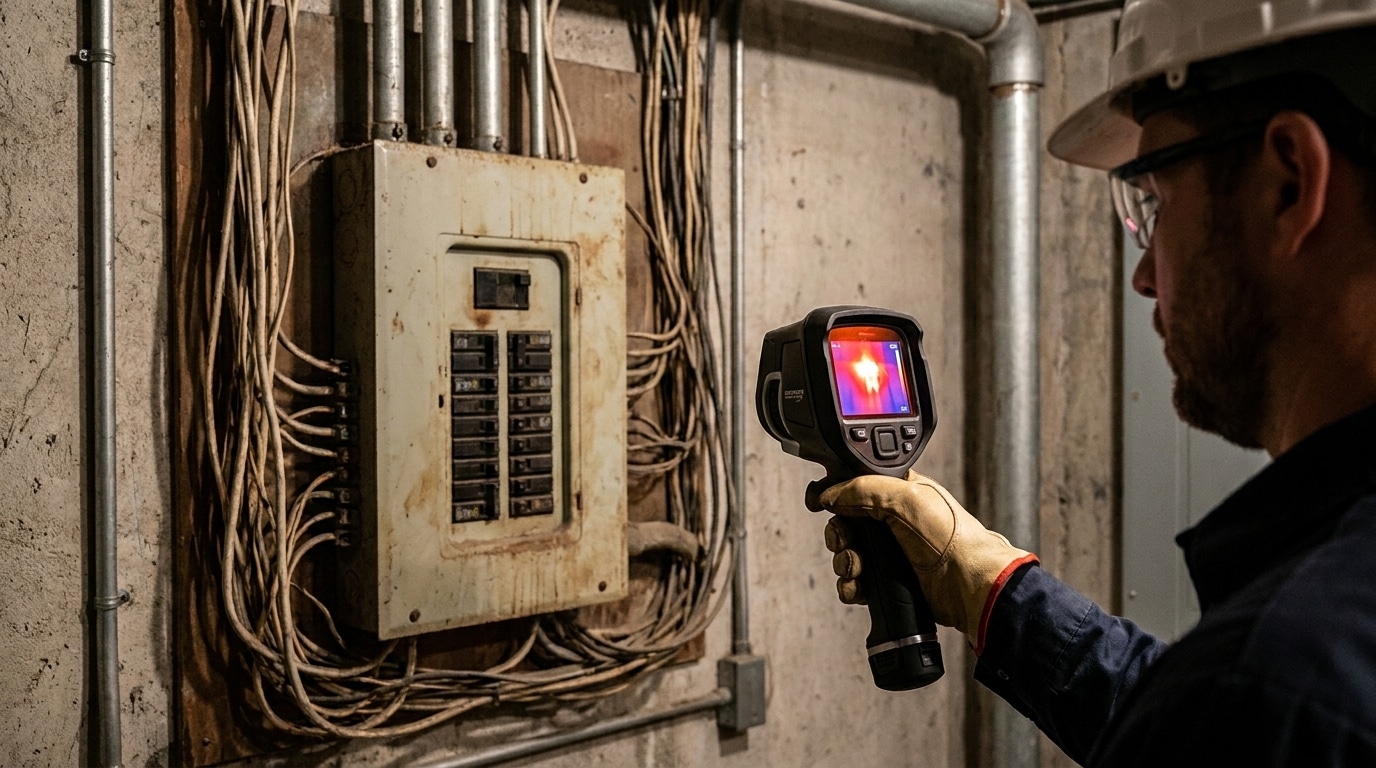
Infrared thermography allows electricians to see heat signatures through panel covers and within electrical enclosures. Infrared imaging identifies hot spots during peak-load times, when the system is under the most stress. Finding these issues early prevents loose connections or failing breakers from igniting and causing damage.
Statistics show that infrared inspections can detect up to 95% of hot spots before a fire actually occurs. The ability to detect heat anomalies makes thermography the gold standard for preventative maintenance in commercial and industrial settings. It allows for targeted repairs that don’t require shutting down the entire facility for long periods of investigation. High-resolution thermal imaging is the most effective way to identify the early signs of aging commercial wiring that are not visible to the naked eye.
Thermal imaging cameras capture images that clearly show where electrical current encounters high resistance. These visual reports provide building owners with concrete evidence of where their system is failing. Regular scanning ensures the infrastructure remains safe without the need for destructive wall testing. It is an indispensable tool for managing the safety of a large-scale commercial property.
Arc Flash Hazard Analysis and Circuit Load Mapping
Aging switchgear often lacks the proper labeling or safety ratings required by modern OSHA inspections. An Arc Flash Hazard Analysis determines the potential energy levels at various points in the system. Energy level calculations help technicians create safety boundaries and identify equipment that is no longer safe to operate under load. Suncoast Power conducts these assessments to ensure your facility remains compliant with NFPA 70E standards.
Measuring the balance of power across different phases is another critical part of a modern electrical audit. Imbalanced loads put excessive stress on the neutral wire, which is frequently not protected by a circuit breaker. In older buildings, this neutral wire can pose a significant fire hazard if it overheats. Circuit mapping ensures that the load is distributed evenly to prevent these dangerous imbalances.
Harmonic distortion is a modern concern caused by electronic ballasts, computers, and variable-frequency drives. These devices create electrical noise that can cause transformers and conductors to run much hotter than expected. Harmonic analysis helps identify these issues so that proper filtering can be installed to protect the system. Filtering harmonic distortion protects your expensive equipment from premature failure caused by poor power quality.
Adhering to NFPA 70B Maintenance Standards
While NFPA 70E focuses on personnel safety, NFPA 70B provides the national standard for the maintenance of electrical equipment. Aging systems require a rigorous preventive maintenance program to ensure that protective devices such as ground-fault circuit interrupters (GFCIs) and surge-protective devices (SPDs) remain functional. Regular testing of these components in accordance with NFPA 70B guidelines helps prevent catastrophic equipment failure and reduce the risk of electrical fires in high-demand environments.
The Insurance Implications of Obsolete Electrical Panels in Florida
Many commercial property owners are currently facing non-renewals or massive premium spikes due to Zinsco or FPE panels. Insurance underwriters view these components as high-risk liabilities that increase the likelihood of a total-loss claim. Having these panels in your building can make it nearly impossible to find affordable coverage in the current market.
Providing a professional inspection report can help you negotiate with underwriters and demonstrate that you are managing your risks. If you have a modernization plan in place, some insurers may offer a grace period or lower rates. However, most will require proof of replacement before issuing a standard policy. Addressing these concerns is a financial necessity for any property owner.
Modernizing your panels doesn’t just improve safety; it increases the overall value and insurability of your property. New systems that comply with current structural assessment laws and electrical codes provide peace of mind for both owners and lenders. It’s a strategic investment that protects your bottom line against rising insurance premiums.
Budgeting for Commercial Electrical Modernization
Replacing an entire electrical system can be a daunting expense for any business. However, a phased approach can mitigate financial strain while significantly improving safety across the facility. You can start by replacing the most dangerous components, such as FPE panels or aluminum branch circuits, before moving on to less critical upgrades.
The cost to replace FPE panels depends on the number of circuits and the accessibility of the main distribution. Most owners find that the long-term savings in insurance and maintenance outweigh the initial capital expenditure. A commercial electrical safety audit is the first step in creating an accurate budget for these necessary improvements. A professional safety audit provides a prioritized list of hazards that need immediate attention.
Planning for upgrades during scheduled downtime or facility renovations can also reduce labor costs. By integrating electrical work with other structural improvements, you can share the costs of permitting and site preparation. A proactive modernization plan ensures that you aren’t forced into an expensive emergency replacement when the system eventually fails. Proper budgeting allows for a controlled and efficient transition to modern infrastructure.
Compliance with NFPA 70E and Modern Safety Standards
Adhering to the National Fire Protection Association standards is a baseline for workplace safety. NFPA 70E specifically addresses electrical safety requirements to protect employees from arc flash and shock hazards. These codes are updated frequently to reflect new information regarding fire triggers and equipment performance.
Many older buildings are grandfathered in under older codes, but this leaves them dangerously behind modern safety benchmarks. Insurance providers are increasingly requiring proof of NFPA compliance to maintain coverage for commercial properties. Keeping up with these standards reduces liability and ensures a safer environment for everyone in the building. It also helps in passing municipal inspections during facility upgrades.
Obtaining an electrical risk assessment is the best way to ensure your property meets these evolving standards. This assessment identifies gaps in your current safety protocols and provides a roadmap for reaching compliance. Protecting your staff from electrical hazards is a fundamental responsibility of any business owner. Modern codes provide the framework for achieving that goal reliably.
Protect Your Florida Facility with Proactive Electrical Safety Audits
Aging wires, outdated panels, and increased load demands create a perfect storm for commercial fires in older buildings. Most electrical fire risks are entirely preventable with the right diagnostic data and a proactive mindset toward maintenance. Understanding that these systems have a limited lifespan is the first step toward securing your facility and protecting your staff.
We specialize in helping commercial and industrial property owners in Florida safely manage their electrical infrastructure. Suncoast Power provides comprehensive safety audits and infrared scans to identify hidden hazards before they cause a disruption. We bring 40 years of experience to every project, ensuring your systems meet the official safety requirements. Our expertise ensures that your building remains safe and compliant with all NFPA fire reports and local codes. Contact Suncoast Power today to discuss a custom maintenance plan or a full system assessment for your facility.