


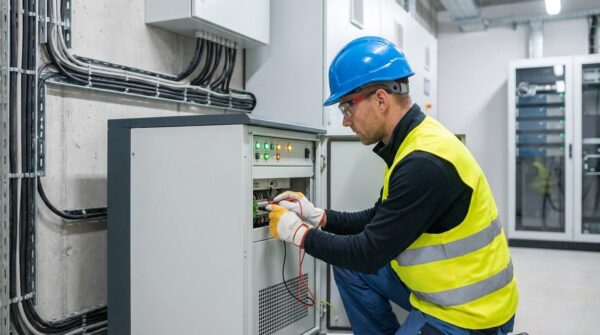


For facility managers and industrial plant operators, electrical infrastructure is the unseen backbone of daily operations. When a system reaches its capacity limit, the risks go beyond simple inconvenience, threatening operational continuity, safety, and regulatory compliance. In high-demand regions like Tampa, ensuring your electrical service is properly rated for your current and projected operational loads is essential for scaling without risking costly outages.
Recognizing when a distribution system has reached its physical limit requires a systematic look at warning signs, industrial demands, and professional diagnostic data. Below are the key indicators, operational triggers, and engineering processes involved in a commercial electrical modernization.

Components Involved in Upgrading Facility Electrical Infrastructure
A commercial power distribution upgrade is the process of increasing a building’s electrical capacity by replacing or modernizing the main service entrances, switchgear, and distribution panels to meet current energy demands and comply with safety codes. The modernization process involves several layers of hardware working in tandem to deliver stable electricity throughout the property. Every component from the utility connection to the final branch circuit must be sized correctly to prevent bottlenecks.
The Main Service Entrance and Utility Interconnection
High-voltage electricity arrives from the utility provider through service conductors that connect to the property at the main service entrance. Utility transformers then step this voltage down to a level that is safe for the building’s internal distribution network. This interconnection point serves as the foundation of the facility’s power infrastructure and must handle the property’s total load. The entry point includes the electrical meter and lateral connections that serve as the primary gateway for all incoming energy. If the service conductors are undersized for the current demand, the entire building will experience power quality issues.
Switchgear, Switchboards, and Main Distribution Boards
Heavy commercial switchboards and main distribution boards serve as central traffic controllers for electrical power. They receive high-amperage current from the main service and divide it into smaller circuits for distribution throughout the building. This hardware manages large volumes of energy while providing a centralized location for system monitoring and control.
These core components house large circuit breakers or fuses that immediately interrupt power during an emergency. They ensure that power surges or faults don’t cascade through the entire system and cause widespread damage to downstream equipment. The integrity of the switchgear is paramount for the overall safety and reliability of the commercial property.
Subpanels, Transformers, and Branch Circuits
Subpanels and dry-type transformers isolate specific voltage requirements for different zones, such as heating, ventilation, and HVAC systems or commercial lighting. This segmentation allows a facility to manage diverse loads without overwhelming a single distribution point in the building. Transformers step down the voltage to 120 or 240 volts for standard receptacles and light fixtures.
Branch circuits then deliver power to the final devices and technology that employees use every day. This layered architecture helps safeguard sensitive hardware from the larger fluctuations common in main power lines. By separating these loads, facility managers ensure that a fault in one area doesn’t bring down the entire operation.
Industry-Specific Electrical Demands for Florida Facilities
Different industries in Florida face unique pressures that dictate the scope of an electrical infrastructure overhaul. A manufacturing plant has vastly different power needs from those of a high-traffic retail center or a transportation hub. Tailoring the upgrade to these specific industrial load requirements is necessary for long-term efficiency and hurricane resilience, especially given the state’s strict building codes.
High-Density Power for Casinos and Gaming Facilities
Modern casino floors utilize high-density gaming machines and HVAC climate control that demand constant, high-amperage draws. These facilities often require specialized power conditioning to protect sensitive electronics from voltage spikes and harmonics. Our engineering teams often find that gaming floors exceed their original design specs by 30% or more due to technology additions.
Critical Infrastructure for Airports and Transportation Hubs
Airports rely on a heavy commercial electrical service to power everything from runway lighting to sophisticated baggage handling systems. These facilities require extremely high reliability and often utilize complex microgrids or backup generation systems. Upgrading facility electrical infrastructure in an airport environment requires meticulous planning to avoid disrupting flight operations.
Cold Storage and Manufacturing Plant Requirements
Cold storage warehouses require massive amounts of power to run industrial refrigeration compressors that must operate continuously. A power failure in these environments leads to catastrophic product loss and significant financial damage. Upgrading the electrical backbone ensures these heavy motors receive stable voltage during peak summer heat in Florida.
Manufacturing facilities often require 480V three-phase power to support heavy machinery and automated production lines. These plants must also account for the power factor penalties that utilities charge for inefficient industrial loads. Installing capacitor banks and modern motor control centers helps these facilities reduce their utility bills while increasing capacity.
The Hidden Risks of Operating with Outdated Facility Electrical Infrastructure
Running a business on aging infrastructure introduces liabilities that impact your bottom line and employee safety. Waiting for a major component to fail before acting is a financially risky strategy, often leading to more expensive repairs. Upgrading facility electrical infrastructure proactively reduces the likelihood of catastrophic failure and long-term financial loss.
Increased Safety Hazards and Electrical Fires
Overloaded systems face a high risk of thermal failures and electrical fires when pushed beyond their design limits. Many commercial fires start after years of unnoticed stress on circuits that were never meant for modern high-tech loads, causing heat buildup that eventually ignites nearby building materials or damages wiring insulation. Existing regulations require employers to identify these hazards before they lead to an accident. Professional electricians use advanced tools to pinpoint these risks before they turn into emergencies.
Costly Operational Downtime and Equipment Damage
Unplanned power failures halt production and result in thousands of dollars in lost revenue for every hour of downtime. Even a single hour of blackouts halts industrial production or causes long delays in office productivity. These interruptions often happen at the most inconvenient times, leading to missed deadlines and damaged client relationships.
Fluctuating voltages and transient surges from outdated distribution systems degrade sensitive electronic components and cause premature burnout of motor windings in heavy HVAC compressors and industrial machinery. This instability shortens the operating life of capital equipment and risks database corruption during sudden, unsequenced IT system shutdowns. Proactively planning an upgrade prevents these unplanned capital expenditures and preserves the lifespan of downstream assets.
Compliance Exposure Under NFPA 70B and OSHA Standards
The National Fire Protection Association 70B has transitioned from a recommended practice to an enforceable standard for electrical equipment maintenance. Failing to adhere to these maintenance requirements can result in significant OSHA citations and legal consequences if an accident occurs. Maintaining your power infrastructure is no longer a suggestion but a mandatory part of professional facility management.
The Occupational Safety and Health Administration requires employers to provide a workplace free from recognized hazards that could cause serious physical harm to staff. Arc flashes are less likely to occur when equipment is properly maintained and operated within its rated capacity. Neglecting these standards invites heavy penalties and increases the risk of disabling injuries within your workforce.
6 Crucial Signs Your Facility Needs an Electrical Power Distribution Upgrade
Identifying the physical symptoms of electrical fatigue allows you to address distribution bottlenecks before they escalate into costly emergency shutdowns. If your building is over 15 to 20 years old or has recently integrated high-demand machinery, monitor your panels, switchgear, and branch circuits closely for these six operational red flags:
1. Frequent Circuit Breaker Trips and Switchgear Overloads
Circuit breakers are designed to shut off power when a circuit’s load exceeds safe limits, preventing damage or fire. If your facility experiences chronic tripping, it’s a warning that the system is operating past its safe rated amperage. While occasional trips are a safety feature, constant interruptions indicate a fundamentally undersized system.
Many modern facilities place a continuous strain on breakers that weren’t designed for current high-density load requirements. This persistent overload causes the switchgear’s internal components to fail under heat and pressure. Replacing the breaker alone is often a temporary fix for a much larger capacity problem.
2. Flickering Lights and Voltage Fluctuations Under Load
Lights that dim or flicker when heavy machinery and HVAC units start up are a sign of insufficient electrical capacity. These drops occur when undersized conductors struggle to manage the high instantaneous start-up demands of large motors. It suggests that the building’s infrastructure is struggling to balance the power needs of different zones.
Unbalanced loads in buildings that have added machinery or commercial refrigeration also cause noticeable voltage fluctuations. This instability leads to unexpected shutdowns of sensitive equipment. These signs indicate that the system can’t provide a steady energy supply during peak operational hours.
3. Excessive Heat, Scorch Marks, or Thermal Hotspots
Electrical panels or enclosures that feel warm to the touch are a serious red flag for facility operators. This heat buildup is a sign of overloaded circuits or loose connections that must be addressed immediately. Resistance within the system generates thermal energy that eventually melts the wire insulation.
Visible discoloration or a burning odor near wiring indicates that insulation is already beginning to fail. These conditions pose an immediate fire risk and are commonly associated with systems operating beyond their capacity.
4. Persistent Humming, Buzzing, or Crackling Sounds
A healthy electrical system should operate silently without producing noticeable noise from panels or fixtures. Buzzing or humming sounds often indicate that current is struggling to flow through components that are failing or overloaded.
Crackling and fizzing noises typically signal active electrical arcing within the system. These sounds indicate serious underlying issues, such as loose wiring or severe insulation breakdown, that could trigger a total system failure. Any unusual noise from an electrical panel requires an immediate inspection to prevent an explosion.
5. Corroded, Rusted, or Physically Damaged Enclosures
Physical deterioration of electrical cabinets is common in environments with high humidity or salt-air exposure. Rust can compromise the integrity of the enclosure, leaving internal components vulnerable to environmental stressors. In coastal regions, this corrosion happens more rapidly and requires frequent monitoring to ensure system safety.
When enclosures are damaged, they no longer effectively protect the switchgear and breakers from dust or moisture. This external wear eventually leads to internal failures that threaten the reliability of the entire power network.
6. Exponentially Rising Utility Bills and Low Power Factor
While loose connections create localized resistance and minor heat loss, the primary driver of rising electrical costs in outdated systems is a low power factor. Inductive loads, such as older, inefficient motors and compressors running without capacitor correction, draw excessive reactive power. This inefficiency results in heavy power factor penalties and high demand charges on your monthly commercial utility statements.
A low power factor results in higher demand charges and penalties on commercial power statements from the utility company. Modernizing the system ensures that electricity is distributed with minimal resistance and better efficiency. These financial metrics often provide the strongest argument for a system-wide upgrade project.
Diagnostic Excellence: Infrared Thermography and Power Quality Analysis
Modern diagnostic tools allow facility managers to see issues that are invisible to the naked eye. We use advanced technology to pinpoint the exact locations of electrical stress before they lead to downtime. Using diagnostic data removes the guesswork from upgrading facility electrical infrastructure.
Identifying Heat with Infrared Thermography
Infrared thermography identifies resistance-based heat before it causes a fire or equipment failure. This non-invasive testing allows technicians to scan live electrical panels under normal operating loads. We look for abnormal heat patterns that indicate overloaded circuits, loose connections, or failing breakers.
Early detection through thermal imaging allows you to schedule repairs during planned maintenance windows. This prevents the chaos of emergency shutdowns and reduces the total cost of ownership for your electrical assets. It’s an indispensable part of a modern preventative maintenance program.
Detecting Harmonics through Power Quality Analysis
Power quality meters detect harmonics and voltage sags that damage sensitive IT equipment and industrial controllers. These hidden fluctuations are often caused by nonlinear loads such as variable-frequency drives or large server racks. If left uncorrected, these issues lead to premature component failure and mysterious equipment resets.
Our analysis helps you understand the health of your power supply and identifies where power factor correction and transient voltage surge suppressors are needed. This data is required to design a commercial power distribution upgrade that supports modern technology. We ensure your facility receives clean, stable power that meets the demands of high-tech operations.
Operational Triggers: When Growth Mandates Upgrading Facility Electrical Infrastructure
Business growth is a common reason for upgrading a facility’s electrical infrastructure. Proactive improvements ensure your power supply stays ahead of your production needs, rather than lagging behind. Modernizing your system is often the only way to remain competitive in an automated industrial landscape.
Integrating Industrial Load Requirements and Heavy Machinery
New production lines and material-handling equipment impose immense power demands on a building’s existing circuits. These industrial assets require a steady, high-volume energy supply that older systems weren’t designed to provide. Adding new loads without an upgrade often leads to immediate breaker failures and production stops.
Industrial load requirements must be evaluated before any new machinery is installed on the floor. A professional electrician can determine if the current panel capacity and circuit distribution can support the additional strain. Without this assessment, you risk damaging both the new equipment and your existing electrical infrastructure.
Facility Expansions, Remodels, and Tenant Improvements
Expanding a warehouse or adding new office workstations increases the number of connected devices that require power simultaneously. These structural additions reduce the capacity of the main panel, leading to frequent overloads throughout the property. Adding square footage almost always necessitates a review of the primary distribution system.
Remodeling projects often include adding specialized workstations or high-density server rooms with unique requirements. These tenant improvements can quickly exhaust the available amperage in a commercial building. A robust service upgrade ensures that all new areas have the reliable power they need to function efficiently.
Retrofitting for High-Capacity Infrastructure: EV Charging and Solar Systems
Installing a fleet of electric vehicle charging stations adds a heavy, continuous load that many older facilities can’t support. This high-capacity infrastructure requires advanced electrical switchgear installation to manage the significant energy draw over long periods. Transitioning to an electric fleet is impossible without first modernizing the building’s electrical backbone.
Integrating commercial solar panel arrays also introduces complexity, as the system must handle reverse power flow into the grid. Upgrading the distribution hardware ensures that these clean energy solutions operate safely within the building’s existing network. These modern upgrades enable a facility to adopt sustainable technology without compromising its core operations.
Evaluating Your Facility’s Current Power Load Capacity
Facility managers should use scientific measurements to assess their current usage before committing to a major capital project. Determining actual industrial load requirements helps avoid both under-powering your building and overspending on unnecessary capacity. A professional evaluation provides the data needed to make informed decisions about your infrastructure.
Navigating National Electrical Code Load Calculations
Professional engineers use specific formulas to calculate the total load of a commercial building in accordance with the latest NEC standards. These calculations must account for fixed lighting, HVAC equipment, and various appliance loads throughout the property. The process ensures that the system is sized correctly for the specific activities occurring on-site.
Calculations also distinguish between continuous and non-continuous duty requirements to ensure stability during peak hours. Accurate load calculations provide the documentation required to secure building permits and utility approvals. This formal analysis is the first step in designing a system that meets both safety and operational needs.
Understanding Connected Load vs. Demand and Diversity Factors
The connected load is the sum of all equipment ratings if every device in the building ran at the same time. It’s rare for both the light and the motor to operate simultaneously, so using this number alone leads to over-engineering. Engineers must examine how the building actually uses energy each day.
Demand and diversity factors are used to estimate actual peak usage under realistic operational cycles. This approach prevents the costly over-engineering of electrical infrastructure while still providing a safe margin for future growth.
The Core Components of an Electrical Infrastructure Overhaul
A physical upgrade project involves more than just swapping out a few breakers; it’s a comprehensive overhaul of the main power components. This process often includes a substantial increase in commercial electrical service to accommodate higher current demand from the utility. Every component must be carefully selected to match the specific needs of the facility.
Heavy Commercial Electrical Service and Utility Coordination
Upgrading the main service requires close coordination with the regional utility company to increase the capacity arriving at the building. This might involve converting a standard 200A service into a heavy commercial 400A or 800A service. Larger facilities may even require a multi-thousand-amp service to support heavy industrial manufacturing.
The project involves structural work such as installing new lateral drops and high-capacity conduits. Technicians must also install current transformer cabinets to house the larger conductors and metering equipment required for the increased load. These upgrades provide the necessary foundation for all downstream power distribution within the property.
Heavy Electrical Switchgear Installation and Main Distribution Boards
Electrical switchgear installation is a complex task that involves setting up air-insulated or gas-insulated systems to manage high-amperage current. Modern switchgear is much more compact and efficient than the bulky units used in the past. These systems serve as the primary protective layer for the building’s entire electrical network.
Smart switchgear now includes digital communication capabilities and arc-flash mitigation to improve safety for maintenance crews. These advancements allow for real-time tracking of asset health and faster response times during a fault. Installing modern distribution boards is one of the most effective ways to maximize facility reliability.
What to Expect During the Commercial Power Upgrade Process
Understanding the timeline and phases of a major electrical project helps reduce anxiety for facility managers and property owners. A structured roadmap ensures that every step from engineering to final testing is completed with minimal impact on your business. Most large-scale upgrades follow a predictable four-phase process to ensure safety and quality.
Phase 1: The Initial Assessment and Feasibility Study
An experienced contractor begins by performing an on-site physical evaluation of your current electrical distribution network. They review the original drawings and assess the condition of the existing switchgear to determine what can be reused. This assessment identifies the specific bottlenecks that are limiting your facility’s current performance.
The contractor also coordinates with the utility company to review historical power logs and establish a baseline for your energy needs. This initial study is requisite for creating an accurate project scope and a realistic budget.
Phase 2: System Engineering, Load Calculations, and Permits
Licensed engineers create detailed drawings that outline the mechanical and structural configurations of the new system. These plans ensure that every component meets current safety codes and operational requirements for the facility. The engineering phase is where the technical specifications of the switchgear and transformers are finalized.
The team submits these plans to local building authorities and the utility provider to secure the mandatory permits for the project. Obtaining these approvals is a critical step that must be completed before any physical work begins. Proper permitting ensures that insurance providers and local regulators recognize the upgrade.
Phase 3: Procurement, Installation, and Scheduled Outage Coordination
Once permits are issued, heavy equipment such as custom-engineered switchgear, transformers, and distribution boards is procured. Because these assets often have long lead times, physical work is closely synchronized with arrival dates. The physical installation is planned to minimize operational impact, often scheduled on weekends or during off-peak hours, or executed in sections. Temporary generator sets or bypass distribution systems may be deployed to keep critical environmental, safety, and server loads powered throughout the cutover.
Phase 4: Testing, Commissioning, and System Re-energization
Before the newly installed infrastructure is permanently energized, field technicians perform rigorous safety and operational tests. This includes insulation resistance testing (meggering), torque verification of all mechanical connections against manufacturer specifications, and verification of the operation of overcurrent protective devices. Once tests confirm system integrity, the regional utility is coordinated for final service connection, the main breakers are closed, and the system is systematically re-energized under monitored conditions.
Safety & Compliance: Navigating the Mandatory NFPA 70B Standard
Safety standards for industrial environments have become more strictly enforced as regulatory bodies prioritize preventing workplace accidents. Maintaining your physical electrical systems is now a core component of overall liability management for any commercial property. Understanding these rules is necessary to avoid legal trouble and protect your employees.
Arc Flash Hazard Markings and Code Revisions
Modern codes require that all commercial electrical panels feature clear, up-to-date arc flash hazard markings. These labels must detail the nominal system voltage, boundary distances, and the specific personal protective equipment needed for workers. The arc flash boundary is the distance at which a worker could sustain second-degree burns without proper gear.
Updated labeling ensures that anyone servicing the equipment is fully aware of the potential risks before they begin work. Arc flash incidents represent a catastrophic risk where temperatures exceed 35,000 degrees Fahrenheit during an explosion. The resulting blast is nearly four times hotter than the Sun’s surface and can vaporize objects within a few feet.
Maintaining equipment in accordance with NFPA 70B standards is a critical part of controlling these risks. Regular testing provides auditors with a documented history of your system’s health. This transparency is a key part of reducing the number of disabling injuries caused by electrical contact every year.
Speak To Suncoast Power About Upgrading Your Commercial Power Distribution
Catching the signs of an exhausted electrical system early protects your facility from unplanned downtime and catastrophic safety hazards. From frequent breaker trips to physical corrosion, these indicators show that your current infrastructure can no longer support your operational goals. Addressing these issues early reduces the cost of emergency repairs and supports the future growth of your business.
Suncoast Power’s expertise in commercial and industrial electrical solutions allows us to design systems that keep your property powered reliably and efficiently. We focus on delivering cost-effective results that meet the highest standards of quality and safety. Contact us today to schedule a comprehensive, high-capacity electrical assessment for your property.