



Asset managers now view retail plaza electric vehicle charging infrastructure design as a critical utility requirement rather than a simple tenant perk. As shopping centers become high-capacity electrical distribution hubs, owners must balance consumer demand for Level 3 fast-charger power distribution with high-amperage thermal loads and harmonic distortion. The technical demands on commercial power grids require a precise engineering approach to maintain site-wide reliability.
Evaluating comprehensive facility power engineering alongside a certified master electrician protects existing tenant operations while allowing for future growth.
Engineering Requirements for Shopping Center Parking Infrastructure Electrical Systems
Modern retail centers remain underserved by existing electrical amenities. Research shows that only 1% of 270,000 reviewed retail locations currently offer any form of vehicle charging. On average, EV charging is present at only one out of every 14 big-box stores and one out of every 15 grocery stores, while department stores lag at one out of every 40 locations.
Balancing Outdoor Lighting, Digital Signage, and Vehicle Charging Demands
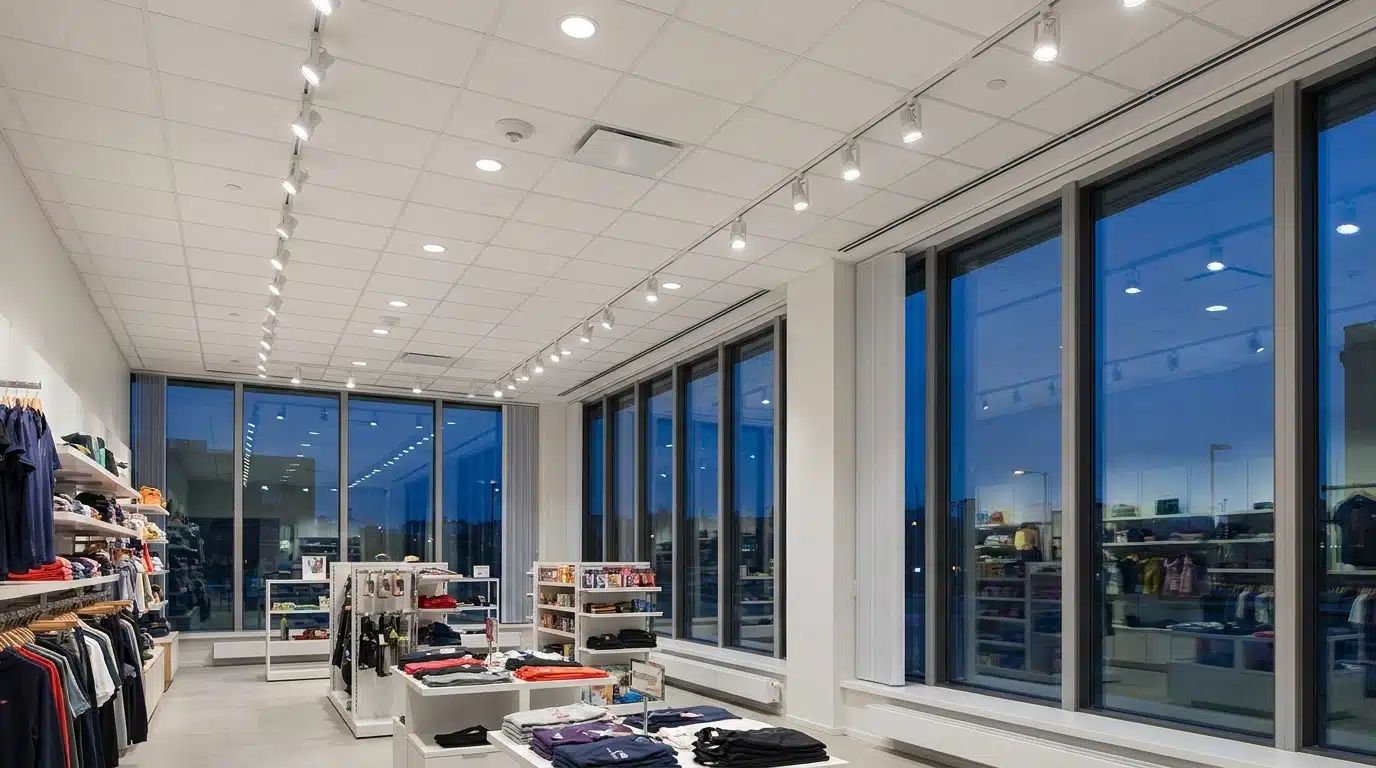
Outdoor lighting and digital signage represent a significant portion of a property’s baseline electrical profile. These systems often energize simultaneously during evening peak hours, when commuter traffic spikes demand for vehicle charging. This operational overlap can create a cumulative load that threatens to exceed the main service panel’s capacity.
National Electrical Code dictates load calculations for continuous electrical equipment to manage these interactions. Engineers distinguish between continuous and non-continuous electrical loads to prevent distribution overloads. For example, parking lot luminaires that run for several hours require different classifications than intermittent equipment.
Uncoordinated power draw across multiple systems can lead to localized failures or unexpected utility penalties. Landlords maintain a stable power environment by mapping the energy needs of architectural facade illumination and digital displays alongside charging equipment. Such a comprehensive view of shopping center parking infrastructure electrical needs is the first step in avoiding site-wide shutdowns.
How Do Dynamic Electrical Loads Impact Commercial Switchgear and Voltage Stability?
The sudden activation of multiple high-speed chargers draws instantaneous current surges of 100 to 300 amps that can destabilize the local power network. These spikes often result in voltage sags and harmonic distortion that propagate through the site’s switchgear. If left unmanaged, these fluctuations migrate into the main retail building and impact common commercial equipment.
Sensitive tenant assets like point-of-sale terminals and commercial refrigeration compressors are particularly vulnerable to poor power quality. Persistent harmonic distortion can overheat motors and cause premature failure of precision heating, ventilation, and air conditioning controllers. Property engineers must prioritize the monitoring of total harmonic distortion to protect these expensive interior systems from outdoor electrical activity.
Implementing robust power conditioning equipment and intelligent load isolation helps mitigate the risks of transient surges. Managers ensure business continuity for all tenants by creating a buffer between high-draw outdoor amenities and delicate indoor electronics. Protecting the site from these physics-based risks requires a specialized approach to commercial electrical design.
Retail Plaza EV Charging Infrastructure Design: Engineering the High-Voltage Backbone
Core components of a commercial EV infrastructure backbone include:
- Dedicated utility transformers for high-voltage isolation.
- Outdoor-rated main switchboards with intelligent trip units.
- Make-ready underground conduit systems for future capacity.
- Dynamic energy management controllers for load curtailment.
Supporting high-speed direct current vehicle charging and battery thermal management requires an industrial-grade distribution strategy that isolates outdoor equipment from existing tenant panels. Developing a retail plaza EV charging infrastructure design focused on a high-voltage backbone ensures the property can scale with technological advancements. This approach protects the main building from the high-amperage demands of modern vehicles.
Level 3 Fast Charger Power Distribution and Dedicated Utility Interconnections
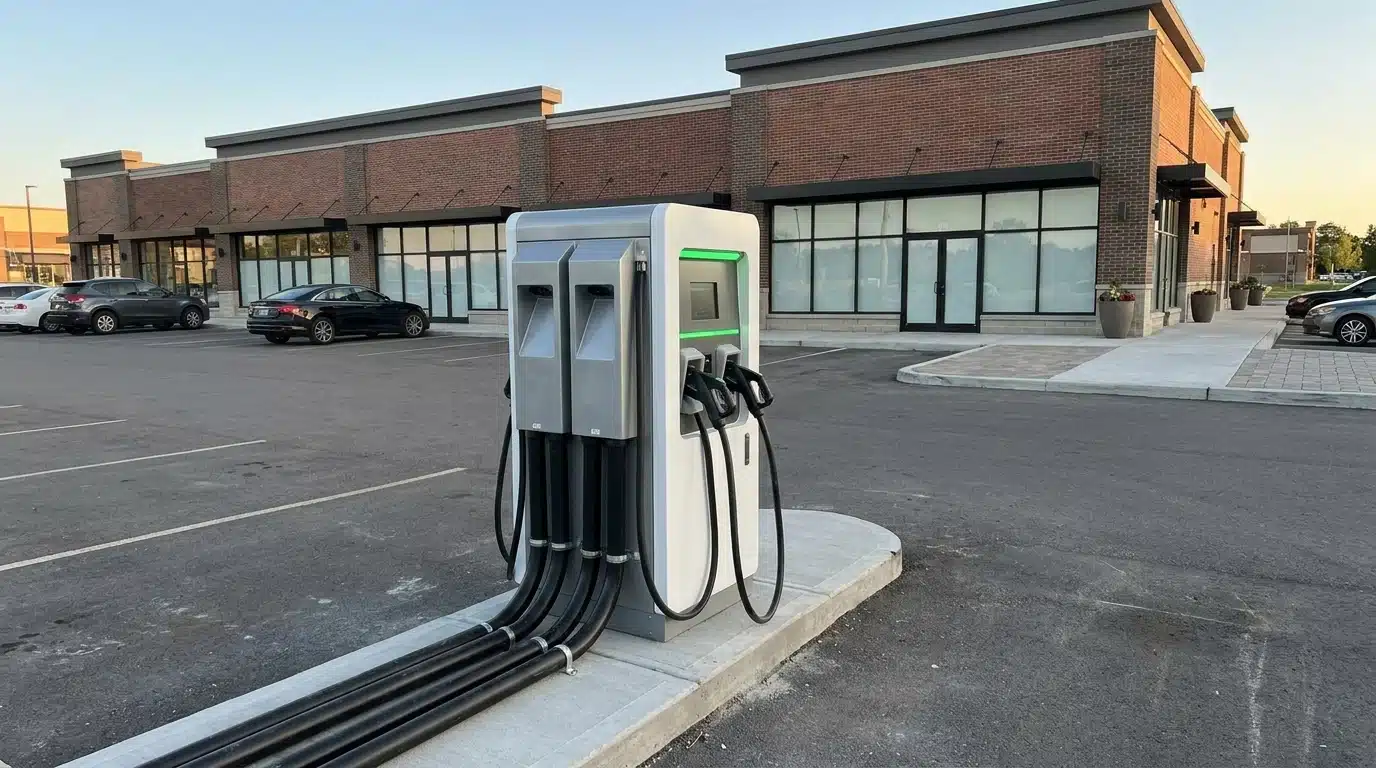
Level 3 fast charger power distribution refers to delivering high-voltage direct current electricity to vehicle charging stations. Delivering power directly bypasses the vehicle’s onboard converter, enabling rapid battery charging in 20 to 60 minutes. It’s the most effective way to attract high-turnover traffic to a retail location.
Level 3 fast chargers operate on 480-volt, three-phase power supplies, which far exceed the capacity of standard commercial 120/208-volt panels. Upgrading a site to 277/480V service is a common requirement for these installations. Transformer upgrades often range from 500 kilovolt-amperes to 1500 kVA to support multiple high-output charging pedestals.
The utility engagement process begins with a detailed feeder capacity study and available fault current analysis. Engineers verify substation headroom to ensure the utility can deliver the necessary amperage without compromising local service. This early coordination is mandatory to avoid delays and unexpected infrastructure costs during construction.
Securing a dedicated utility service drop with a pad-mounted transformer sited near the charging plaza offers significant operational advantages. A dedicated transformer configuration minimizes voltage drop along low-voltage secondary feeders and keeps property-owned switchboards separate from public utility lines. This separation simplifies maintenance and ensures outdoor electrical faults do not affect tenants’ power supply.
Switchgear Isolation and Protecting Indoor Retail Distribution Networks
Dedicated outdoor main switchboards and specialized circuit breakers establish selective coordination between systems. This architecture ensures that any electrical fault occurring in the parking lot is isolated before it can cascade upstream. Engineers use digital trip units to fine-tune interruption timing and maintain maximum site-wide uptime.
Installing multi-stage surge protection devices at the utility service entrance and the outdoor distribution panels is another layer of defense. These devices protect the infrastructure from lightning-induced surges and inductive switching transients caused by large motor starts. Consistent protection of high-voltage gear extends the lifespan of both the chargers and the internal building electronics.
Safety remains a priority, requiring clear arc-flash hazard boundaries around all outdoor high-voltage equipment. Accessible exterior emergency power-off disconnects must be clearly labeled to ensure municipal first-responder safety during an incident.
Underground Civil Works: Conduit Sizing, Trenching, and Make-Ready Infrastructure
The civil engineering phase of an electrical expansion project involves significant site disruption and logistical planning. Landlords can reduce long-term costs by installing make-ready infrastructure, such as oversized Schedule 40 or Schedule 80 polyvinyl chloride conduits, during initial construction. Installing make-ready infrastructure lets landlords double charging capacity later without expensive repaving.
Engineers frequently use horizontal directional boring as an alternative to open trenching to minimize traffic disruptions in active parking fields. Florida’s high water tables and high-traffic retail corridors make boring a preferred method for underground installations. While boring has a higher initial cost, it saves money on asphalt remediation and keeps customer access points clear.
Contractors must protect all underground conductors with moisture-resistant wiring types to survive subsurface moisture infiltration. Contractors must strictly follow soil compaction standards to prevent conduit runs from sinking under the weight of heavy delivery trucks.
Strategic Outdoor Retail Site Power Management and Demand Control
Energy management is an economic necessity for commercial retail landlords because unmanaged high-draw equipment can quickly erase operating margins. Implementing an outdoor retail site power management strategy lets owners control demand spikes and reduce total cost of ownership. Smart power management also improves the return on investment for all electrical amenities.
Dynamic Energy Management and Battery Storage Solutions
Intelligent software controllers and automated energy management systems prevent site overloads by communicating with chargers in real time. These systems curtail power output during peak store energy usage and restore full speeds when anchor tenant demand subsides. Automated load curtailment ensures the total site load never exceeds the utility’s pre-defined safety thresholds.
Dynamic load-sharing algorithms distribute available capacity among multiple vehicles based on arrival time and target charge levels. Dynamic load sharing allows a shopping center to install more charging ports than the raw electrical service would normally support. By managing electricity flow intelligently, property owners avoid costly utility service upgrades.
Automated load management also helps in maintaining grid stability by responding to external signals from the utility provider. Responsive demand control turns the retail plaza into a grid-balancing asset during times of extreme stress. Utility demand charges often depend on the highest electricity use during a brief 15-minute window in a billing cycle. A single event where multiple fast chargers activate simultaneously can artificially inflate a power bill for the entire month. Commercial behind-the-meter battery energy storage systems solve this problem by providing local power during these peaks.
These battery units charge during low-cost overnight periods or off-peak midday hours when demand is low. They automatically discharge stored power during evening traffic rushes to shave peak grid demand and keep utility costs predictable. Battery storage provides a significant return on investment for high-traffic retail locations with frequent charging events.
Installing these systems requires specific physical layout planning and high-grade thermal cooling to ensure safe operation. Compliance with National Fire Protection Association 855 fire protection standards is mandatory when locating large battery systems in outdoor commercial zones.
Commercial Parking Lot Electrical Expansion: Layout, Safety, and Site Logistics
Electrical engineering must align with civil design to ensure new infrastructure does not impede daily operations. Shopper behavior should dictate the placement of charging plazas. For example, charging stations near grocery stores average 42 sessions per day, nearly five times the median usage rate.
Siting Strategies for Traffic Flow and Compliance
Destination charging spaces suit areas near cinemas or department stores, where visitors typically spend several hours. High-turnover fast chargers belong near highway ingress points or convenience kiosks for rapid access. A well-planned layout prevents queuing vehicles from gridlocking the main parking corridors and ensures smooth traffic flow.
Stations with 11 or more nearby amenities see seven times the utilization compared to isolated charging locations. Florida law defines an electric vehicle charging station as the area that includes the supply equipment, supporting hardware, and associated parking spaces. Compliance with Florida Statutes section 366.94 is required for all public-facing installations.
Meeting Americans with Disabilities Act requirements is critical to any site plan. Accessible stalls must have specific dimensions, level surface slopes, and unobstructed paths of travel to the retail entrances. Cable dispensers must also be mounted at compliant operating heights to ensure all patrons can use them.
Severe Weather and Impact Hardening Requirements
Outdoor electrical gear requires robust physical protection to defend against accidental vehicle impacts and Florida’s harsh environment. The following items represent the standard for severe weather and impact hardening:
- Concrete-filled steel pipe bollards and protective curbs.
- Elevated equipment pads to keep sensitive components away from floodwaters.
- National Electrical Manufacturers Association 3R or NEMA 4X weather-sealed enclosures to resist corrosion.
- Lightning protection systems integrated into the site design.
Integrating Solar Canopies with Charging Infrastructure
Pairing high-capacity chargers with commercial solar canopies transforms idle parking structures into active energy assets. Photovoltaic arrays generate supplemental direct current power during peak daylight hours to offset the massive draw of rapid charging sessions. These structures also provide essential shade for vehicles and equipment, naturally lowering operating temperatures and improving hardware longevity.
High operating temperatures can cause electrical equipment to derate, reducing efficiency during summer months. Liquid-cooled charging cables and internal heat exchangers often manage thermal dissipation in high-draw hardware. Shaded canopy placement further protects equipment from direct sunlight, helping it operate at peak performance year-round.
Long-Term Asset Management: Balancing Operational Budgets and Capital Investment
Property owners have several options for managing the ownership of their charging infrastructure. Under a direct capital expenditure model, the owner purchases and monetizes the equipment to keep all generated revenue. Alternatively, a third-party lease model allows a charging network operator to pay rent for the parking spaces, reducing the landlord’s upfront costs.
Florida law clarifies that providing electric vehicle charging services is not the retail sale of electricity. As a result, non-utility providers avoid the strict rate and term regulations imposed on traditional power companies. The Department of Agriculture and Consumer Services also adopts rules for price-posting and labeling to ensure consistency.
Digital submetering gives landlords the granular visibility needed to track energy consumption for each charging unit. Granular submetering data lets retail managers accurately separate outdoor infrastructure costs from general tenant maintenance fees. Accessing utility make-ready incentives and federal tax credits further lowers the initial capital requirements for these projects.
Preventive Electrical Maintenance, Uptime Assurance, and Code Compliance
Maintaining high equipment uptime requires a rigorous testing and inspection regimen. Annual infrared thermographic inspections effectively identify hot spots and loose electrical lugs before they lead to failure. Finding these issues early prevents catastrophic equipment damage and keeps chargers available for customers.
Adhering to mandatory NFPA 70B electrical maintenance standards is necessary for ongoing code compliance and safety. Strict adherence includes regular ground-fault circuit testing and verification of emergency shutdown switches by qualified professionals. Regular software and firmware updates are also required to keep the charging hardware compatible with the latest vehicle technology.
Establishing a dedicated service agreement with a licensed commercial electrical contractor provides peace of mind for property owners. These agreements typically cover emergency repairs and routine inspections to meet minimum uptime guarantees.
Partner with Suncoast Power to Engineer Your Retail Center’s High-Voltage Outdoor Infrastructure
Integrating high-capacity vehicle charging and advanced outdoor lighting requires a sophisticated approach to power distribution. A resilient installation requires dedicated utility services, selective switchgear protection, and intelligent load management systems. By investing in make-ready underground civil works and robust physical protection, property owners can build a scalable infrastructure that serves consumers for decades. Strategic planning for layout, safety, and ADA compliance ensures these new electrical amenities enhance the retail environment rather than congesting it.
Suncoast Power is Tampa’s leading commercial electrical contractor, with over 40 years of experience managing complex retail developments and high-voltage upgrades. We specialize in designing and installing scalable infrastructure across Florida, ensuring your property is equipped for the future of transportation. Contact our engineering and installation specialists at Suncoast Power today to schedule a comprehensive site capacity assessment and make-ready infrastructure consultation.