



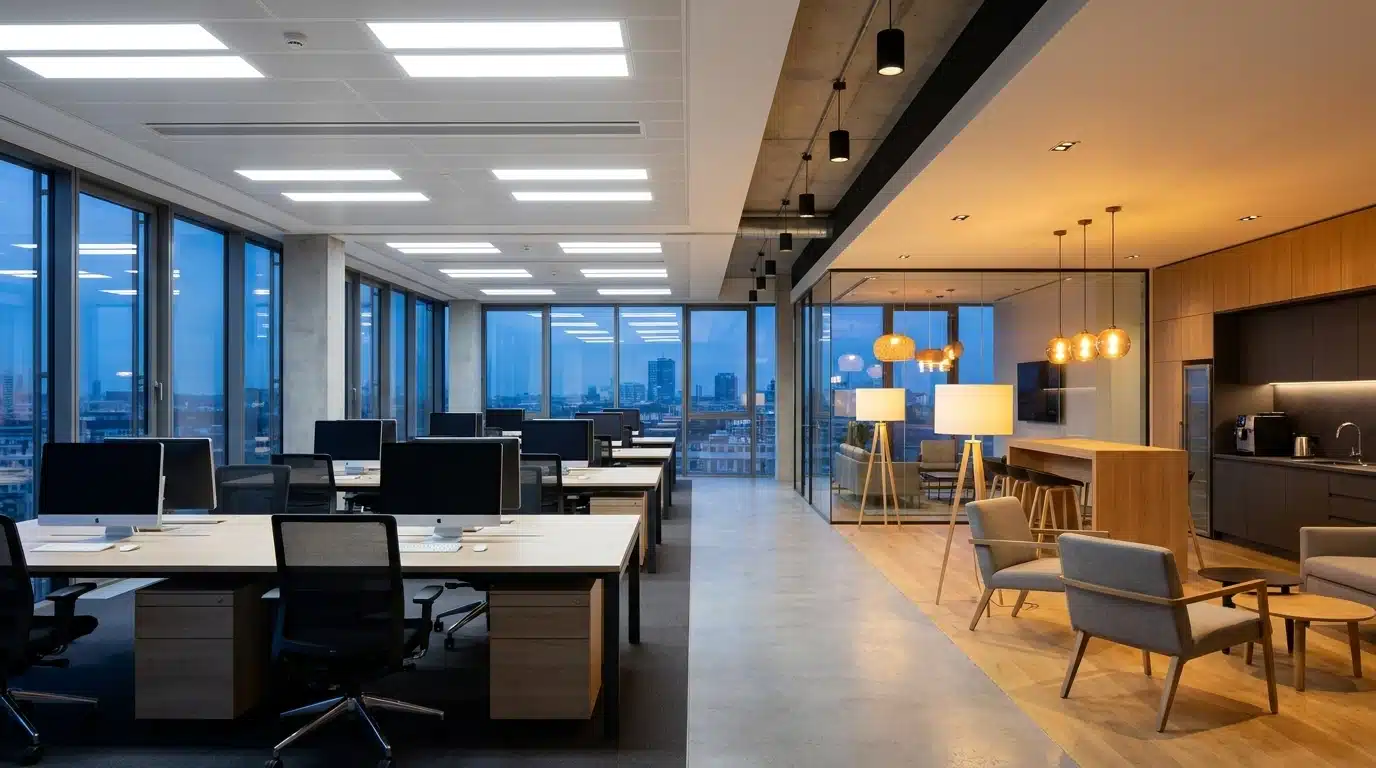
Commercial property owners often face quantifiable operating costs when maintaining older lighting infrastructure. Offsetting these commercial lighting installation costs is possible through a strategic combination of state and federal financial incentives. Transitioning to LED technology represents a capital improvement with a documented payback period, stabilizing long-term operating budgets while improving light quality.
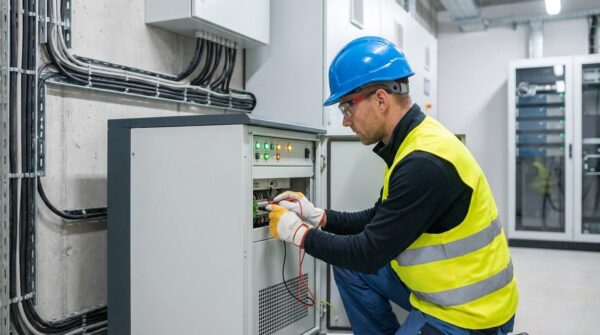
Facility managers should accurately budget for initial expenses before these incentives apply to the project. Analyzing commercial lighting installation costs is a necessary part of the early planning phase for facility retrofits. Suncoast Power manages complex electrical upgrades for industrial properties in Florida and has been helping Tampa businesses for over 40 years. Mastering the mechanics of electrical upgrades hardens a building against rising energy costs.
Why Commercial LED Retrofits Are a Strategic Financial Investment
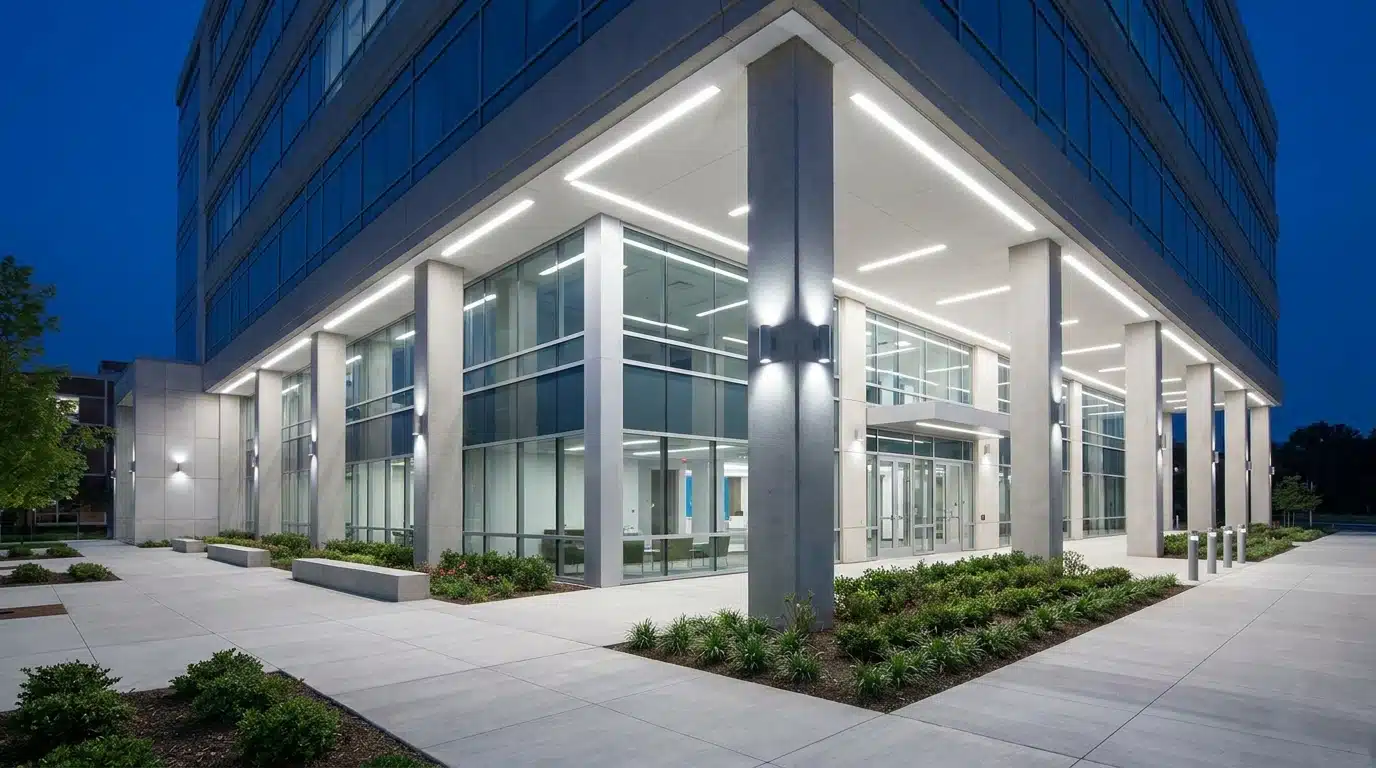
Upgrading to LED systems provides quantifiable financial returns that extend far beyond simple aesthetic improvements. Legacy lighting technologies are becoming increasingly expensive to operate and maintain in a competitive commercial market. Stakeholders today prioritize sustainability and efficiency, making these upgrades a cornerstone of modern property management strategies.
The High Cost of Sticking With Outdated Fluorescent Lighting
Maintaining outdated fluorescent systems creates a constant drain on a facility’s maintenance budget. Frequent bulb replacements and ballast failures require labor hours that could be better spent on other operational tasks. According to Florida Power and Light, lighting can account for 25% or more of a business’s total energy use.
Legacy systems fail to compete with modern LED efficiency due to their high heat output and shorter lifespans. Many facilities find that sticking with older fixtures leads to higher building cooling loads because traditional bulbs emit significant ambient heat. Identifying these technical gaps is essential for improving a facility’s overall energy efficiency and performance.
Delaying a lighting upgrade results in measurable monthly losses for a commercial operation. These hidden costs accumulate through lost efficiency and the rising price of replacement parts for obsolete fixtures. Proactive facility managers recognize that these older systems are a liability that hinders overall profitability and operational reliability.
Modern LED fixtures offer longer lifespans, saving on replacement and maintenance costs over many years. The extended durability of modern fixtures is particularly beneficial for high-ceiling environments like warehouses, where access requires specialized equipment. Reducing the frequency of lighting failures ensures that a team stays productive without the distraction of flickering or dead lamps.
How Kilowatt-Hour Savings Immediately Improve Cash Flow
Reducing kilowatt-hour consumption provides an immediate boost to monthly operational cash flow. LED fixtures use significantly less power to produce the same or better lumens than traditional high-intensity discharge or fluorescent lights. The dramatic reduction in energy demand is reflected in the very first utility bill after the installation is complete.
LED fixtures reduce annual utility expenditures by up to 70% compared to legacy systems. These month-over-month savings often cover the initial project financing or out-of-pocket costs much faster than property owners anticipate. For businesses operating across large footprints, such as shopping centers and manufacturing plants, these savings can total thousands of dollars annually.
High-efficiency lighting ensures that every dollar spent on electricity goes toward actual illumination rather than wasted heat. Modernizing a system with a specialized commercial electrical contractor ensures the new infrastructure meets current performance requirements. Reallocating utility expenses directly improves the facility’s net operating income.
Efficient lighting systems allow a business to reallocate those funds toward other critical areas of growth. The immediate impact on the bottom line makes LED upgrades one of the most attractive capital improvements available. Utility bills represent a variable cost that a manager can ultimately control precisely through modern electrical engineering.
Boosting Property Value and Reducing Your Carbon Footprint
Installing high-efficiency LED systems with integrated occupancy sensors increases the overall valuation and marketability of any commercial property. Appraisers and potential buyers look favorably upon buildings with low operating costs and updated electrical systems. A facility equipped with modern LED lighting, networked lighting controls, and IoT-enabled occupancy sensors is more attractive to premium tenants who value a highly efficient working environment.
Environmental responsibility is also becoming a key metric for commercial tenants and regulatory bodies like the EPA. Reducing a carbon footprint through energy efficiency aligns a business with global sustainability standards. It’s an effective way to demonstrate corporate citizenship while simultaneously improving the physical quality of a workspace.
Lowering energy consumption reduces the reliance on local power grids and contributes to broader regional sustainability goals. Many corporate entities now require detailed environmental reports to satisfy investor demands and ethical benchmarks. Implementing these upgrades provides the necessary data to support a company’s commitment to green operations.
Sustainable infrastructure also provides a hedge against future environmental regulations that may mandate higher efficiency standards. By acting now, a property owner avoids the rush and potential price increases associated with future compliance deadlines. Acting proactively protects the long-term viability and value of the real estate asset.
Ensuring EPA Compliance During Legacy Fixture Disposal
Proper disposal of outdated fluorescent tubes and magnetic ballasts is a critical phase of any commercial lighting retrofit. Fluorescent lamps contain trace amounts of mercury, while older ballasts may house polychlorinated biphenyls, both of which require specialized recycling protocols under the Resource Conservation and Recovery Act. Partnering with a certified commercial electrical contractor guarantees that all hazardous materials are manifested and recycled at approved facilities. Documenting the disposal process protects property owners from environmental liability and reinforces the overall sustainability goals of the LED upgrade.
Navigating Local Utility Rebates for Commercial Lighting in Florida
Local utility providers often offer subsidies to help businesses reduce the total cost of their lighting upgrades. These programs are designed to lower the overall strain on the electrical grid by rewarding efficiency. Leveraging commercial lighting rebates and Florida energy efficiency grants can turn a standard maintenance project into a highly subsidized capital improvement.
Understanding Prescriptive vs. Custom Rebate Programs
Utility companies typically offer two main pathways for securing financial incentives for lighting. Prescriptive rebates are predetermined cash amounts paid out for specific fixture replacements or one-to-one swaps. These are often easier to calculate upfront because they provide a fixed dollar amount per unit installed in the facility.
Custom rebates are based on the total projected energy savings generated by more complex or facility-wide lighting redesigns. These programs are often more lucrative for large-scale projects that involve advanced controls and custom layouts. Property owners should evaluate which structure yields the highest financial return based on their specific square footage and usage patterns.
Choosing the right rebate path requires an understanding of both current consumption and future energy goals. Duke Energy Florida, for example, offers prescriptive rebates ranging from $20 to $50 per fixture. Their custom incentives are calculated based on the specific annual kilowatt-hour savings a project achieves.
Navigating these choices involves a deep dive into the technical specifications of the proposed equipment. A custom approach often requires detailed energy modeling to prove the intended savings to the utility provider. The custom rebate process, while more complex, often yields a much larger financial payout for the business.
Exploring Florida Utility Programs and Energy Efficiency Grants
Major local utility providers in Florida offer robust commercial energy efficiency programs. FPL provides business lighting programs for existing buildings, offering rebates of up to $20 per fixture. All businesses are generally eligible to participate, provided the property is already established and operational.
Various Florida energy-efficiency grants may also be available for specialized structures, such as manufacturing facilities or airports. These specialized funding sources help offset the costs of high-performance lighting in demanding industrial environments. Identifying these regional programs requires staying current on the latest state and local utility policies.
Suncoast Power helps identify all available programs in the Tampa area to ensure no money is left on the table. Professional guidance is often the difference between a standard upgrade and a fully optimized financial strategy. Our team works directly with local providers to maximize the value of utility rebates for lighting.
The landscape of these grants can change quickly as funding cycles begin and end throughout the year. Staying informed about the latest LED retrofits and incentive news is vital for timing a project correctly. Early application often provides an advantage before annual rebate pools are exhausted by other local businesses.
Navigating the Utility Approval Lifecycle
Securing utility rebates requires adherence to a specific administrative process to avoid delays or denials. Administrative errors in the application phase can cause a business to lose thousands of dollars in anticipated funding. Most utility providers, including FPL and Duke Energy, require a formal pre-installation inspection before any existing fixtures are removed from the site.
The lighting system must be pre-approved by the utility company before the installation begins. Purchasing equipment or starting physical work without this approval almost always results in a denial of the rebate. Partnering with a knowledgeable contractor ensures that all technical specifications and paperwork are submitted correctly the first time.
After the installation is complete, the final documentation must be submitted to the utility provider to trigger payment. This usually includes contractor invoices and proof that the installed equipment matches the pre-approved plan. Following these steps diligently protects the investment and ensures the rebate check arrives as expected.
Understanding the EPAct 179D Commercial Buildings Energy Efficiency Tax Deduction
Federal tax strategies offer another layer of financial relief for businesses investing in energy-efficient renovations. The EPAct 179D tax incentive is one of the most powerful tools available for commercial property owners today. Understanding the mechanics of this federal program is a critical step toward maximizing the overall financial return on a major lighting upgrade.
What is the Section 179D Federal Tax Deduction?
Section 179D allows commercial building owners to claim a significant tax deduction for installing qualifying energy-efficient systems. Section 179D reduces federal taxable income for qualified building owners by allowing them to deduct costs in the year equipment is placed in service. The Section 179D provision primarily focuses on interior lighting, HVAC systems, and the building envelope.
Using these LED tax incentives allows a company to avoid long-term depreciation schedules that typically last decades. Instead of small annual write-offs, a business receives a substantial immediate deduction that improves its current-year tax position. The immediate tax relief creates a powerful incentive for businesses to modernize their infrastructure sooner rather than later.
The deduction is available to owners of qualified commercial buildings who place energy-efficient property into service. It effectively reduces the business’s taxable income, providing more liquid capital for other operations. Robust federal support makes high-efficiency lighting upgrades a top priority for financially savvy property managers.
For municipal and public buildings, the deduction can be legally allocated to the primary designer or contractor responsible for the work. The allocation rule allows tax-exempt entities to benefit from the program by passing the incentive to the firm handling the energy-efficient design. It is a specific high-value scenario that often goes overlooked by municipal facility managers.
How Recent Updates Expanded LED Tax Incentives
The Inflation Reduction Act of 2022 significantly expanded the potential value of the Section 179D deduction. Beginning January 1, 2023, the base deduction may be $0.50 per square foot for a building that achieves 25% energy savings. The baseline amount increases by $0.02 for each percentage point above that threshold, up to a maximum of $1.00 per square foot for 50% savings.
The potential rewards increase fivefold if the project meets specific prevailing wage and apprenticeship requirements. Under these conditions, the maximum deduction can reach approximately $5.00 per square foot. Meeting prevailing wage requirements makes large-scale commercial retrofits highly lucrative for property owners who prioritize professional labor and high energy standards.
These legislative updates were designed to encourage deeper energy savings across the commercial building sector. By increasing the deduction amounts, the government has made it easier for businesses to justify the cost of comprehensive lighting redesigns. Proactive property owners are now using these expanded rates to fund more ambitious energy goals.
Understanding Section 179D deduction rules is the key to maximizing these benefits in the current tax year. The increased thresholds mean that even moderately efficient projects can now see a significant boost in their federal tax savings. It remains one of the most effective ways to lower the net cost of a major lighting overhaul.
Navigating Qualifications for 179D Deductions in Commercial Spaces
Qualifying for the 179D deduction requires the new lighting system to be part of a plan that reduces energy costs by at least 25%. The energy reduction is measured against a reference building that meets the minimum requirements of ASHRAE Standard 90.1. There are two pathways for this measurement, including a traditional modeling pathway and an alternative measurement pathway.
The Alternative Measurement pathway is specifically designed for upgrades to buildings placed in service at least five years before the retrofit. The alternative pathway requires the aggregate upgrades to reduce energy use intensity by 25% or more using weather-adjusted data. It provides a flexible way for owners of older properties to qualify for significant federal tax benefits.
Knowing how to claim 179D for Florida warehouses involves coordinating with a certified professional to perform energy modeling and obtain certification. The deduction is valid only if the energy savings are verified by a qualified third party in accordance with IRS guidelines. Independent verification is mandatory to defend the deduction in any potential tax review or audit.
Facility managers should ensure that the reference building models use the most recent version of the ASHRAE standard applicable to the 179D calculation. Using correct ASHRAE modeling parameters adds technical nuance, enhances credibility, and ensures the project meets the highest standards of energy performance. Correct classification and modeling are the foundations of a successful tax claim.
Combining Energy Audits, Certifications, and Tax Strategy
Achieving the maximum financial benefit from an upgrade requires a high degree of technical coordination. A manager must use certified equipment and professional assessments to prove that new systems meet rigorous state and federal standards. Integrating these requirements from the start ensures that a project remains eligible for both utility rebates and tax deductions.
Preparing for a Lighting Audit
A professional energy audit establishes a verifiable baseline for an existing lighting system’s energy consumption. The gathered audit data is required to calculate the exact kilowatt-hour savings needed for custom utility rebates. A comprehensive audit should include a full inventory of existing fixtures, their wattage, and their typical daily operating hours.
Independent modeling and formal inspections are also mandatory steps for legally defending a Section 179D tax claim. These audits provide the technical evidence necessary to satisfy IRS requirements in the event of an audit of the deduction. It is a necessary investment that safeguards the thousands of dollars a business intends to save through incentives.
An audit also helps identify specific areas where lighting controls or sensors can further reduce energy waste. A comprehensive view of the building allows a team to design a system that maximizes every available incentive dollar. A well-documented audit serves as the foundation for the entire financial strategy of a commercial lighting retrofit.
Facility managers can prepare by gathering past utility bills and building floor plans before the auditor arrives on site. Having this information ready streamlines the process and ensures that the baseline data is as accurate as possible. Preparation is a critical step for a successful Tampa commercial electrical retrofit ROI analysis.
The Importance of Integrating ENERGY STAR and DLC Standards
Product selection is just as important as the quality of the electrical installation itself. Utility providers and federal guidelines require the use of ENERGY STAR-certified or DesignLights Consortium (DLC) listed fixtures. Using non-certified equipment can disqualify the entire project from receiving any financial incentives or tax credits.
Aligning with EPA efficiency standards ensures that a lighting system performs reliably over its entire lifespan. These certifications guarantee a specific level of optical quality and energy performance that uncertified products cannot match. It gives a property owner peace of mind that the projected energy savings will actually be realized in monthly bills.
The DesignLights Consortium (DLC) Qualified Products List (QPL) is the industry standard for rebate eligibility in the commercial sector. Most Florida utility programs will only issue a rebate check if the specific fixture model appears on this list. Verifying this early in the procurement phase prevents expensive mistakes and ensures financial compliance.
High-quality, certified fixtures also tend to have better warranties and longer operational lives. Investing in certified components reduces the risk of early failure and protects the project’s long-term ROI. Choosing the right products from the beginning is a simple way to ensure a facility meets all necessary compliance benchmarks.
Calculating the Total ROI and Cost Offsets for Your Commercial Upgrade
Calculating the true ROI of a lighting project involves more than just looking at the initial quote. A manager must factor in the total commercial lighting installation costs and then subtract the secured utility rebates. For example, a $85,000 project might receive $23,400 in utility rebates and $14,500 in federal tax credits, drastically lowering the net investment.
Once the net cost is determined, one should divide that figure by the projected annual kilowatt-hour savings. The final calculation reveals the exact payback period, which is often much shorter than property owners expect. It transforms the project from a perceived expense into a highly profitable capital improvement with data-backed returns.
Including maintenance savings in this ROI model further strengthens the financial case for the upgrade. When a facility no longer has to pay for constant bulb replacements or emergency electrical repairs, the total savings grow. A detailed ROI analysis proves that modern LED systems are a primary driver of long-term facility profitability.
Managers should also consider the impact of improved lighting on employee productivity and workplace safety. Improved visibility can reduce accidents and errors, delivering a soft ROI that complements direct financial savings. These combined benefits make LED upgrades a high-priority investment for any modern business operation.
Overcoming Common Hurdles in Rebate and Tax Incentive Projects
The Danger of Skipping Pre-Approval for Rebate Applications
Starting an installation before securing formal pre-approval from the utility company is a costly mistake. Most Florida utility providers almost universally deny retroactive applications once the physical work has commenced. Bypassing the utility approval phase can cost a business tens of thousands of dollars in lost rebate opportunities.
An experienced commercial electrical contractor ensures that the existing system is properly documented before any work begins. The utility requires this documentation to verify the starting point of the efficiency improvements. Skipping this step removes the evidence needed to qualify for the incentive payout from the local power company.
Securing pre-approval also allows a manager to confirm the exact rebate amount before committing to the project budget. It provides financial certainty and allows for more accurate cash flow planning. Protecting these incentive payouts requires a disciplined approach to the project’s timeline and administrative requirements.
Many programs have annual caps on how much money can be paid out to a single customer or property. Applying early in the utility’s fiscal year ensures that funds are still available for the project. Coordination between the manager and the contractor is the best way to hit these critical timing windows.
Why Accurate Documentation Makes or Breaks Your Incentive Claims
Both utility programs and the IRS maintain strict administrative requirements for their respective incentives. A business must keep detailed records throughout the project lifecycle, including specification sheets and contractor invoices. Third-party certification reports and approved energy models are also vital for defending a federal tax deduction.
Failing to maintain this precise paperwork can lead to delayed rebate checks or a total inability to defend a tax claim during an audit. Precise documentation acts as a shield against administrative challenges and financial losses. It is important to have a system in place to collect and organize all technical data generated during the retrofit.
A contractor should provide a comprehensive package of all necessary technical documents upon completion. The completed documentation package serves as the final proof of compliance and the basis for all future tax filings. Accurate record-keeping ensures that the financial benefits of an LED upgrade are fully realized and legally secure.
Digital copies of all permits and inspection reports should also be kept in the facility’s permanent records. Insurance providers or potential buyers often request this information during a property transaction. Thorough documentation demonstrates professional management and adds to the overall credibility of the facility’s operations.
Schedule Your Commercial Lighting Audit with Suncoast Power
Commercial property owners can significantly offset the upfront cost of LED upgrades through a strategic combination of local utility rebates and federal tax incentives. These financial tools transform essential infrastructure maintenance into a highly profitable investment that improves property value and operational cash flow. Lighting is a strategic capital asset with a documented 1.5 to 3-year payback period in most commercial settings.
Proactive planning and professional energy audits are the most effective ways to unlock these financial benefits for a business. Choosing certified equipment and adhering to strict application timelines ensures that a company remains eligible for the maximum possible savings. Our expertise allows you to navigate the complexities of lighting retrofits with confidence and precision in Tampa and across Florida.
Suncoast Power helps design and manage commercial lighting solutions that maximize incentives and keep your business powered reliably. Our team specializes in comprehensive commercial LED lighting and energy efficiency upgrades that deliver a high return on investment. Contact us today for a professional consultation or audit to begin your facility’s transition to high-efficiency lighting.