



Selecting the right commercial lighting color temperature typically involves choosing between 2700K for warmth and 5000K for high-performance tasks. Choosing between warm and high-performance spectrums directly impacts employee productivity and brand perception. Business owners often overlook how specific spectral outputs transform a lethargic office into a high-performance workspace.
Mastering the biological impacts of light spectrums helps facility operators build defenses against operational inefficiency and chronic employee fatigue.
Understanding the Kelvin Scale: The Foundation of Commercial Lighting Color Temperature
Evaluating modern lighting specifications begins with a thorough look at the Kelvin scale. The blackbody radiator framework defines how human eyes perceive white light across interior and exterior environments. Mastering these basics is necessary before selecting fixtures for complex architectural projects or large-scale facility retrofits.
Quick Reference: Recommended Kelvin Ratings for Commercial Spaces
- Corporate Offices: 3500K to 4000K
- Retail Showrooms: 3000K to 4000K
- Hospitality and Dining: 2200K to 3000K
- Healthcare Exam Rooms: 4000K to 5000K
- Industrial Warehouses: 5000K
Decoding the Kelvin Scale: From Warm White to Daylight-Mimicking
The Kelvin scale measures light color appearance. Correlated color temperature, or CCT, describes the beam’s visual warmth or coolness, not its physical heat. It’s based on the blackbody radiator principle, which describes the color a solid object emits when heated to high temperatures.
Lower values, from 2700K to 3000K, appear yellow-orange and create a sense of comfort. Higher values correspond to crisp white light that appears much cooler to the human eye. Daylight-mimicking illumination typically reaches 5000K for industrial settings, though some specialty applications span up to 6500K.
Correlated Color Temperature vs. Color Rendering Index
Correlated color temperature describes light color, while the color rendering index measures color accuracy. A light source might have a pleasing 3000K warmth but still make merchandise look dull if the CRI is poor. A common mistake in commercial construction is confusing these two distinct metrics.
Standard commercial applications usually require a CRI value of 80 or higher for adequate visibility and appearance. Specialized environments like art galleries and high-end showrooms push that requirement to an architectural-grade CRI of 90 or above. Higher ratings often include a high R9 saturated red value, which is necessary for accurately rendering skin tones and vibrant textiles.
Balancing Color Temperature With Illuminance (Foot-Candles)
A common engineering oversight occurs when facility managers upgrade to a cooler color temperature without adjusting the illuminance, measured in foot-candles. Cooler light naturally appears brighter to the human eye, so a 5000K LED fixture emitting the same lumen output as a 3000K fixture can create perceived glare if foot-candle requirements aren’t recalculated. Lighting designers must calibrate both the spectrum and the illuminance volume simultaneously to prevent visual discomfort in the workspace.
Architectural Aesthetics and Contrast Ratios for Visual Impact
The way a color temperature interacts with architectural materials can completely change the look of a finished room. Warm white light accentuates rich wood grains, natural stone, and earth-toned fabrics. In contrast, cool white light is the preferred choice for modern designs featuring concrete, glass, and stainless steel.
Consistency makes a space feel professional and intentional. Placing a cool 5000K fixture next to a warm 2700K source often looks like an installation mistake. Designers use contrast to highlight specific building features while maintaining a cohesive overall look for the property.
The Psychological Impact of Light and Human Behavior
The human brain responds directly to the light spectrum in a workspace. These physiological reactions lead to measurable differences in operational outcomes and financial performance. Bright Florida sunlight also affects how users perceive the transition from outdoors to indoor lobbies.
Circadian Biology, ipRGC Activation, and Workplace Alertness
The human eye contains intrinsically photosensitive retinal ganglion cells known as ipRGCs. These cells contain a photopigment called melanopsin that is particularly sensitive to short-wavelength blue light. When light between 4000K and 5000K activates these cells, they signal the brain to suppress melatonin and increase cortisol.
Suppressing melatonin reduces daytime fatigue and supports cognitive focus during intense tasks. This relationship between light and health is now a formal part of the WELL Building Standard, which emphasizes circadian lighting design.
Mood Setting, Visual Warmth, and Dwell Time in Public Spaces
While cool light energizes a workforce, warm white light between 2200K and 3000K creates a calming and stress-reducing atmosphere. Warm visual spectrums foster the hospitality and intimacy public-facing businesses need. When customers feel comfortable, they are subconsciously encouraged to relax and stay longer.
Luxury boutiques and premium hotels leverage these lower Kelvin ratings to cultivate a sense of exclusivity and satisfaction. A warm environment can make a high-end restaurant feel more private and welcoming. These emotional cues often lead to higher transaction values as patrons spend more time engaging with products.
Best Office Lighting Temperature for Focus and Comfort
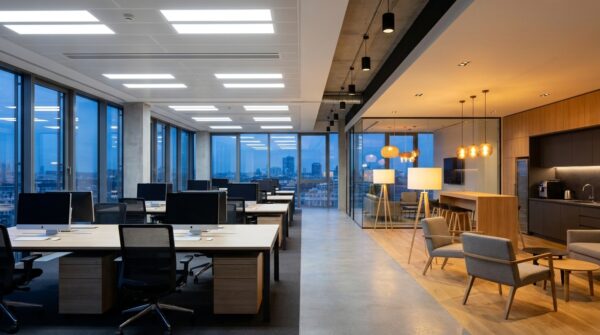
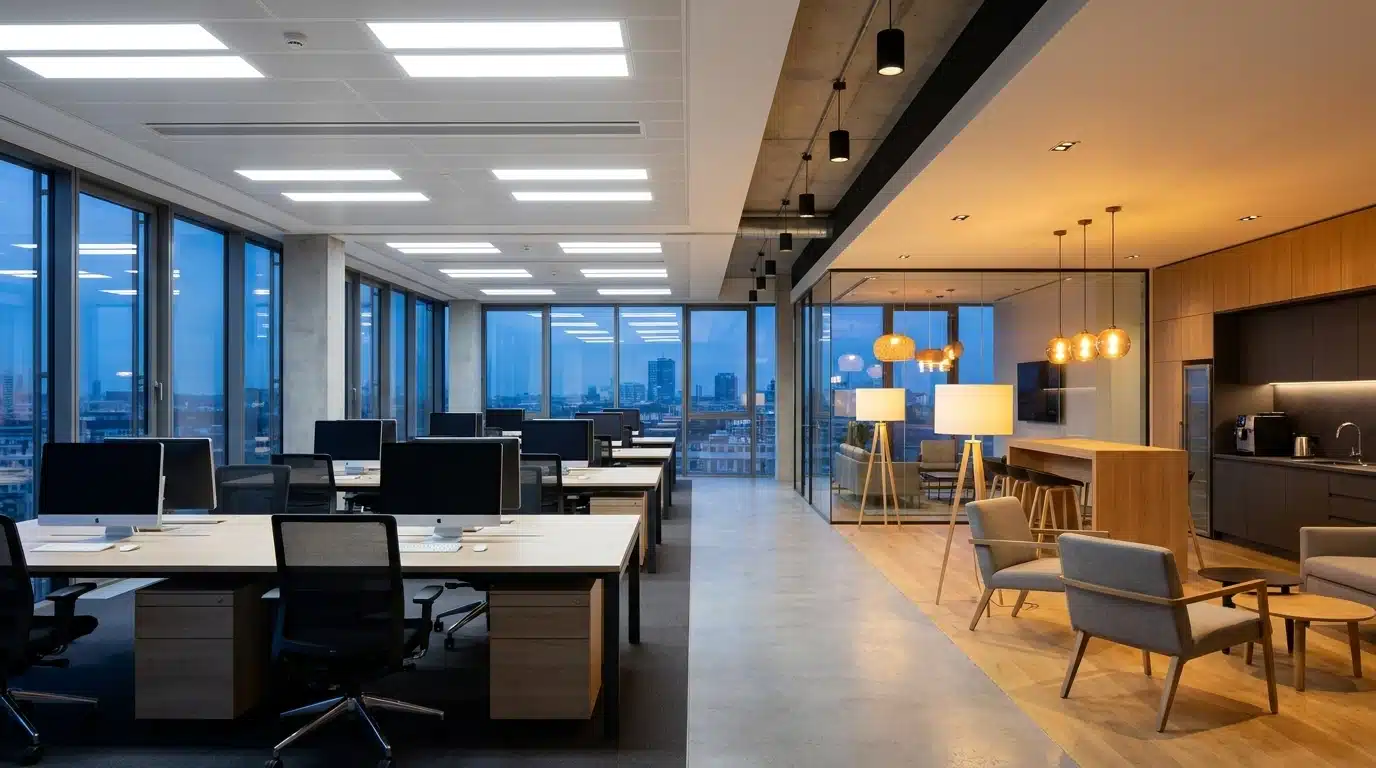
Finding the ideal office lighting temperature means balancing focus with staff comfort. The commercial standard for open workstation areas is generally between 3500K and 4000K. This neutral band provides enough visual clarity to prevent eye strain during long hours of screen-based work.
Large corporate offices often benefit from a multi-zone strategy that uses different temperatures for different purposes. Conference rooms and collaboration zones might use 4000K light to stimulate active discussion and engagement. In contrast, employee breakrooms and wellness areas should shift to 3000K warm white light to support genuine mental decompression.
Professionals implement these designs using 0-10V dimming or Digital Addressable Lighting Interface control protocols. These systems allow for fine-tuned adjustments that support long-term productivity and employee well-being. High-performance fixtures with 50,000-hour rated lifespans help keep the office environment reliable and efficient over years of operation.
Choosing the Right Kelvin Rating for Retail Showrooms
Effective retail lighting design utilizes specific color temperatures to guide the customer journey through a showroom. Many fashion apparel zones and retail lobbies use 3000K to create a luxurious, inviting glow. This warmth makes shoppers feel comfortable as they browse through high-end items or try on clothing.
Other retail sectors, such as grocery produce sections or automotive showrooms, often deploy 4000K to 5000K light. These cooler temperatures produce crisp contrast and help highlight a product’s definition and detail. For example, chrome hardware and diamonds sparkle much more effectively under cooler, high-contrast light sources.
Professional lighting retrofit services keep retail displays vibrant and appealing. Choosing the wrong temperature can make high-quality products look washed out or unappealing. Carefully calibrated overhead fixtures keep high-quality merchandise from looking washed out and draw shoppers naturally toward featured displays.
Clinical Illumination for Healthcare and Specialized Facilities
While retail showrooms prioritize inviting aesthetics, clinical environments shift the design focus entirely to demanding requirements for visual acuity and precision. Examination rooms and surgical suites require a crisp neutral-to-cool range of 4000K to 5000K. These areas also require a minimum 90 CRI rating to ensure that clinicians can accurately differentiate between various tissues without color distortion.
Precise illumination is a safety requirement that enables accurate reading of monitors and medical equipment. However, the lighting needs change significantly when moving from a procedure room to a patient recovery area. In these wards, lighting should incorporate warmer 3000K fixtures or tunable white systems that support patient rest.
Florida healthcare facilities must follow regulatory guidelines while balancing medical precision with patient comfort. A well-designed hospital uses a variety of color temperatures to serve these conflicting but equally important needs. Hospitals ultimately require dynamic controls to quickly transition a room from a brightly lit emergency triage space to a warm, restful recovery ward.
Prioritizing Safety in Industrial Warehouses and Manufacturing Plants
Industrial distribution centers and manufacturing plants have visual requirements that focus almost entirely on safety and efficiency. Most high-bay and low-bay installations in these spaces utilize 5000K cool white illumination. This color range maximizes lumen efficacy and provides the sharp contrast ratios needed across vast warehouse floors.
Cooler light helps machine operators and forklift drivers identify obstacles and read small barcodes quickly. It also allows assembly technicians to inspect product tolerances with a high degree of accuracy. In an environment where a small mistake can lead to a workplace accident, clear visibility is a fundamental part of the safety plan.
Commercial lighting installation in Tampa requires adhering to specific code requirements to ensure long-term reliability. Maintaining the proper contrast between general ambient lighting and specific task lighting helps to prevent optical fatigue. Clear visibility drastically reduces accident rates on the active warehouse floor.
Energy Efficiency Upgrades and Local Utility Rebates
Upgrading to the right color temperature with LED technology qualifies Florida businesses for significant financial incentives. Providers like Tampa Electric Company or Duke Energy offer energy rebates for high-efficiency retrofits.
These rebate programs drastically lower the initial capital investment for property owners looking to modernize their facilities.
Selecting fixtures with L70-certified performance helps ensure consistent light output for decades. Modern LED drivers also support advanced dimming to increase energy savings further. Professional contractors manage the paperwork and engineering requirements to ensure compliance with industry lighting standards and local code mandates.
Maintaining Color Consistency and Color Drift Management
Maintaining consistent color across a large campus or multi-tenant facility is a significant technical challenge. Facility managers should look for fixtures that follow American National Standards Institute C78.377 chromaticity standards and specify tight MacAdam ellipse tolerances. Fixtures binned within three to four standard deviation steps help to avoid visible tint differences between adjacent lights.
Over years of operation, many LEDs experience a phenomenon known as spectral color drift. Heat dissipation issues or low-quality driver components can cause this color shift. When lights shift at different rates, they create a patchy, unprofessional appearance across a ceiling or facade.
Modern tunable white lighting systems and digital controls address these long-term maintenance issues. These systems let facility operators adjust CCT dynamically to match external conditions or change a space’s use on demand. Investing in high-quality infrastructure ensures lighting stays consistent and adaptable for years to come.
Schedule An On-Site Lighting Assessment Today
Selecting the right commercial lighting color temperature is a strategic business decision that affects employee productivity and customer satisfaction. The right choice improves a building’s overall efficiency while creating a professional atmosphere. By balancing technical Kelvin requirements with occupants’ psychological needs, facility owners create spaces that are both beautiful and functional.
Suncoast Power provides Florida-certified electrical engineering and installation, backed by more than three decades of experience delivering expert solutions. We specialize in designing, installing, and maintaining sophisticated systems for a wide range of commercial and industrial properties. Our expertise ensures your facility has high-quality, scalable infrastructure that meets the highest industry standards. Contact us today to schedule a comprehensive lighting design consultation for your facility.