


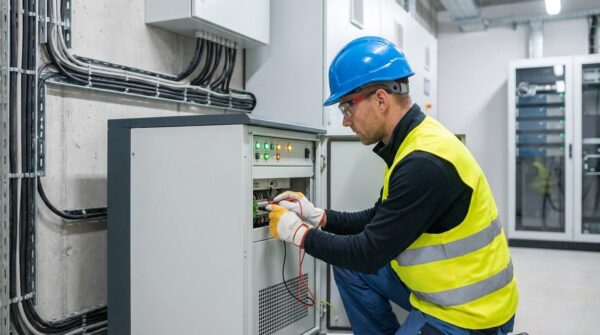

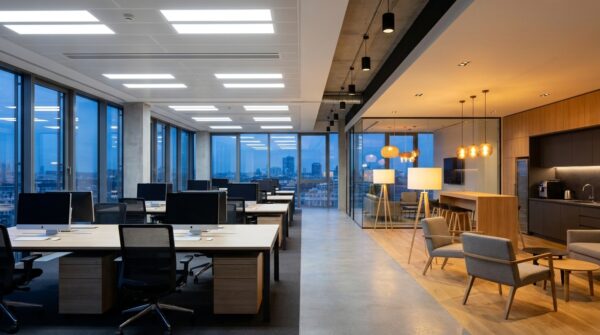
Determining the cost allocation differences between office Cat6 and industrial fiber optic integration is a critical phase in commercial infrastructure planning. While standard Cat6 installations range from $125 to $350 per drop, industrial fiber runs often exceed $1,500 due to specialized environmental protections and hardware requirements. Understanding these variables ensures that facility managers in Florida can optimize their capital expenditures while building a scalable network foundation.
Selecting the wrong cabling for extreme conditions leads to premature jacket degradation, signal failure, and expensive operational downtime. For Florida facility managers, mapping initial capital expenditures against long-term maintenance costs requires evaluating specific environmental stressors (such as humidity and electromagnetic interference) against the physical limits of each media type.
Comparing Industrial Network Backbone Pricing: Office Environments vs. Harsh Manufacturing Plants
The physical environment fundamentally drives the cost differential between copper and fiber. While controlled office spaces allow for unshielded, standard-jacket copper cabling, harsh industrial environments demand specialized, higher-cost physical media to ensure network uptime.
Electrical Interference and Environmental Stressors on the Plant Floor
Industrial properties, such as manufacturing facilities and power plants, present unique physical challenges that standard office buildings don’t face. Heavy motors and high-voltage conduit runs generate electromagnetic interference that exceeds standard residential thresholds. Welding equipment and large power distribution units contribute to radio frequency interference that disrupts sensitive data transmissions. These factors make unshielded copper a liability in high-noise environments.
Unshielded copper cabling acts as an antenna for electrical noise in industrial settings, causing packet loss and signal degradation. While ANSI/TIA-569-D suggests maintaining a 12-inch separation from high-voltage lines (and NEC Article 800 requires strict physical barriers or a minimum separation of 2 inches from open power conductors), routing copper around heavy machinery often requires complex, expensive pathway engineering. Utilizing non-conductive, glass-core fiber-optic cabling completely bypasses these electromagnetic interference restrictions.
Using light pulses makes the glass cores completely immune to electrical noise and radio frequency disruption. While the initial material cost is higher, the immunity to environmental stressors justifies the expenditure for plant floor operations.
Structured Workstations vs. Multi-Facility Industrial Backbones
Corporate offices rely on high-density, short-run horizontal cabling designs where hundreds of localized workstations connect directly to a closet. These layouts prioritize the volume of connection points over long-distance transmission capabilities. Most office drops stay within a tight radius to ensure the signal remains strong across the copper conductors. Centralizing connections keeps the per-drop cost lower by avoiding expensive long-haul hardware.
Industrial configurations require long-haul backbones to link separate buildings, vast warehouse corridors, or remote security points. These environments often demand connectivity across distances that exceed the physical limits of copper wiring. A single distribution center might require links that span several hundred thousand square feet of floor space. Industrial network backbone pricing reflects this scale, as fiber is the only medium capable of bridging these distances without signal loss.
Low-Voltage Cable Selection: Cat6 vs. Fiber Material Cost Factors
Selecting commercial cabling requires analyzing immediate material costs against long-term performance needs. Selecting the correct physical medium dictates the downstream costs of network switches, transceivers, pathways, and termination labor.
What Is the Average Cost of Commercial Structured Cabling?
On average, Installers charge $125 to $350 per drop for Cat6 structured cabling in a commercial building. In contrast, industrial fiber-optic installation costs drive prices to $500 to $1,500 per run. This price range includes the cable, connectors, and the labor required for termination and testing. If your project involves extreme complexity or high-security requirements, prices can reach up to $850 per copper drop.
Cost Comparison Breakdown
| Cable/Run Type | Average Cost Per Run | Primary Application & Constraints | Typical Cost Drivers |
| Standard Cat6 (Copper) | $125 – $350 | Office drops, under 100m, standard dry environments. | Plenum-rated jacketing, patch panel ports, RJ45 termination. |
| Shielded/High-Security Cat6A | $350 – $850 | High-EMI industrial zones, secure government facilities. | STP shielding, grounded patch panels, complex testing. |
| Industrial Multi-Mode Fiber | $500 – $1,200 | Intra-building backbones, manufacturing floors, under 550m. | Armored (interlocking aluminum) jacket, LC/SC fusion splicing. |
| Industrial Single-Mode Fiber | $1,000 – $1,800+ | Long-distance campus backbones, multi-facility integration. | Outdoor/underground wet-rated conduit, laser transceivers, extensive OTDR testing. |
These price ranges serve as a baseline for facility managers who are budgeting for a new build-out. You should account for the fact that material costs only make up about 30% to 40% of the total quote. The rest of the budget goes toward specialized labor and certified testing.
Cat6 vs. Fiber Commercial Cost: Analyzing Scalable Infrastructure
Standard Cat6 copper cable pricing is highly economical for modern businesses, typically averaging $0.15 to $0.35 per linear foot. Cat6a material costs are slightly higher, ranging from $0.40 to $0.60 per foot. When you factor in the entire drop, including labor and testing, the copper solution remains the most cost-effective for localized workstations.
Copper cables rely on electrical signals that experience rapid attenuation due to the physical resistance and capacitance of copper conductors. This attenuation imposes a strict 100-meter (328-foot) structural limit on Cat6 channels. Designing beyond this limit requires introducing active network repeaters or constructing additional Intermediate Distribution Frame closets, which adds substantial hardware and HVAC costs to the project.
Cat6 is the logical, budget-friendly baseline for desk drop applications where distances are short. It supports gigabit speeds and handles 10 Gbps over short distances of up to 55 meters. Most office and retail spaces find this performance more than sufficient for daily operations. If you need 10 Gbps over the full 100 meters, you’ll need to upgrade to Cat6a, which increases your material costs by about 50%.
Single-Mode vs. Multi-Mode Fiber Optic Materials
Single-mode fiber features a tiny glass core of around nine microns that utilizes laser light sources to transmit data over several miles. This material typically costs between $0.10 and $0.50 per foot for the cable itself. It’s the premier choice for campus backbones because it supports distances up to 100 kilometers without amplification. You’ll use this for your most critical long-distance links.
Multi-mode fiber uses a larger core of 50 or 62.5 microns and relies on LED light sources. This type of cable is more cost-effective for high-bandwidth enterprise connections over distances of up to 500 meters. Multi-mode fiber ranges from $0.30 to $1.00 per foot, providing a balance between performance and transceiver costs.
Realistic material cost ranges for fiber vary from $1 to $6 per foot, depending on fiber count and jacket requirements. While the cable itself might seem inexpensive, the connectors and termination hardware drive the total material budget higher than copper. Fiber remains the required choice for projects with stringent network requirements that exceed copper’s reach.
Physics of Signal Attenuation: Why Distance Matters in Costing
Copper cables rely on electrical signals that experience rapid attenuation due to the physical resistance and capacitance of copper conductors. This attenuation imposes a strict 100-meter (328-foot) structural limit on Cat6 channels. Designing beyond this limit requires introducing active network repeaters or constructing additional Intermediate Distribution Frame closets, which adds substantial hardware and HVAC costs to the project.
In contrast, fiber-optic lines transmit data via infrared light pulses that utilize total internal reflection within a silica glass core, with negligible attenuation. On sprawling industrial campuses, transitioning from copper to a fiber-optic backbone can eliminate the need for secondary IDF closets. This consolidation reduces upfront capital expenditures by eliminating the need for dedicated enclosure structures, dedicated electrical feeds, and localized climate control systems.
Long-Term ROI: Lifecycle and Maintenance Costs
Infrastructure decisions made during the design phase dictate the total cost of ownership for decades. Fiber-optic infrastructure provides a 20-to-30-year operational lifespan, significantly outlasting the 5-to-15-year functional life of copper systems. You should consider how often you’re willing to rip out and replace your cabling. Fiber’s durability makes it a much better investment for facilities that can’t afford frequent downtime.
In Florida’s high-humidity, coastal salt-air environments, copper conductors undergo accelerated oxidation at termination points, leading to increased contact resistance, packet loss, and channel failure. Fiber-optic cables utilize non-metallic silica glass cores that are entirely immune to chemical corrosion, electrolytic oxidation, and ground-potential shifts caused by lightning strikes. For non-climate-controlled Florida warehouses or outdoor coastal runs, selecting fiber or wet-rated, water-blocked copper is essential to protect physical-layer investments.
The maintenance requirements for fiber are also significantly lower than those for copper. You don’t have to worry about crosstalk or electromagnetic interference causing intermittent packet loss or latency issues. Properly installed fiber networks require fewer service calls and less troubleshooting throughout their service life. Lower maintenance requirements help offset the higher upfront installation costs.
When you calculate your ROI, you must also look at future bandwidth needs. A single-mode fiber backbone installed today can handle 100 Gbps speeds without any physical changes to the cable. Copper cabling is much more limited, and you’ll likely need to upgrade it several times to keep up with new technology.
Interface Hardware Infrastructure: Transceivers and Media Conversion
Copper networks and fiber optic backbones can’t communicate directly without specialized active networking hardware. Fiber-optic transceivers and media conversion tools play the necessary role of converting electrical signals into light pulses. These hardware dependencies reshape project budgets and must be accounted for early.
Small Form-Factor Pluggable Optical Transceivers
Small form-factor pluggable modules are hot-swappable devices that plug directly into switch ports to convert electrical signals. These modules come in various grades to match the specific fiber type and distance requirements. They allow for easy upgrades without needing to replace the entire network switch.
Standard enterprise SFP and SFP+ transceivers generally cost between $20 and $80 per unit. However, industrial-grade transceivers cost three to five times more due to specialized component hardening. These ruggedized transceivers are engineered with wider operating temperature ranges (typically -40 to 85 degrees Celsius) to prevent thermal-induced laser degradation on the factory floor.
Industrial-grade transceivers are engineered to survive extreme temperatures, high humidity, and voltage fluctuations. These specialized modules ensure that data continues to flow even in environments where standard hardware would fail. Paying the premium for ruggedized transceivers is a necessary expense for maintaining continuous uptime.
Unmanaged vs. Industrial DIN-Rail Media Converters
Standard, unmanaged media converters in commercial offices cost between $50 and $150 and are typically used to extend a single outlying surveillance camera run. Conversely, industrial DIN-rail-mounted media converters cost between $300 and $600. These units feature hardened IP30-rated metal enclosures, high electromagnetic immunity, and redundant 12-48V DC power inputs to handle the voltage fluctuations and vibration common in industrial control panels.
Power over Ethernet in Office vs. Industrial Settings
Cat6 cabling offers a major advantage in enterprise local area networks by supporting Power over Ethernet standards such as IEEE 802.3af and 802.3at. This technology allows you to power Voice over Internet Protocol phones, security cameras, and Wi-Fi access points through the data cable. It eliminates the need for a separate electrical outlet at every device location.
Industrial PoE applications often utilize IEEE 802.3bt to deliver up to 90W of power to motorized pan-tilt-zoom cameras or heated enclosures. Deploying high-power PoE over large cable bundles causes heat buildup that increases insertion loss and degrades signal integrity. Installers must adhere to TIA-184-A guidelines and NEC Article 725 bundle-size limits, restricting bundle sizes and utilizing larger conduits to ensure adequate heat dissipation.
Standard office switches with PoE are relatively affordable, but industrial PoE switches are much more expensive. A hardened industrial switch must manage power delivery while exposed to dust and extreme heat. These switches feature specialized cooling and protected circuitry to ensure they don’t burn out under heavy loads. You’ll need to budget for these high-performance components if you’re powering devices on the factory floor.
Because pure fiber-optic cables cannot conduct electrical power, powered endpoints require local power feeds, hybrid copper-fiber cables, or localized PoE injectors. Within the 100-meter threshold, Cat6 remains the most economical delivery method for both data and power. In hybrid topologies, contractors deploy a high-speed fiber backbone to localized field switches, distributing PoE power via short copper runs to the actual devices.
Physical Medium Selection and Labor Costs
Labor typically represents 60% to 80% of a low-voltage project’s total cost. The specialized skill sets and equipment required to terminate fiber-optic cables create a stark budgetary contrast to copper. Project managers must account for these labor differences when evaluating a bid.
Standard RJ45 Crimping and Punch-Down Costs
Terminating Cat6 copper cabling is a highly efficient process that keeps labor costs relatively low. A skilled low-voltage installer can quickly punch down copper conductors into keystone jacks or patch panels. Punching down conductors utilizes standard, inexpensive hand tools that do not require a massive capital investment from the contractor. Rapid crimping allows for predictable per-drop pricing in standard environments.
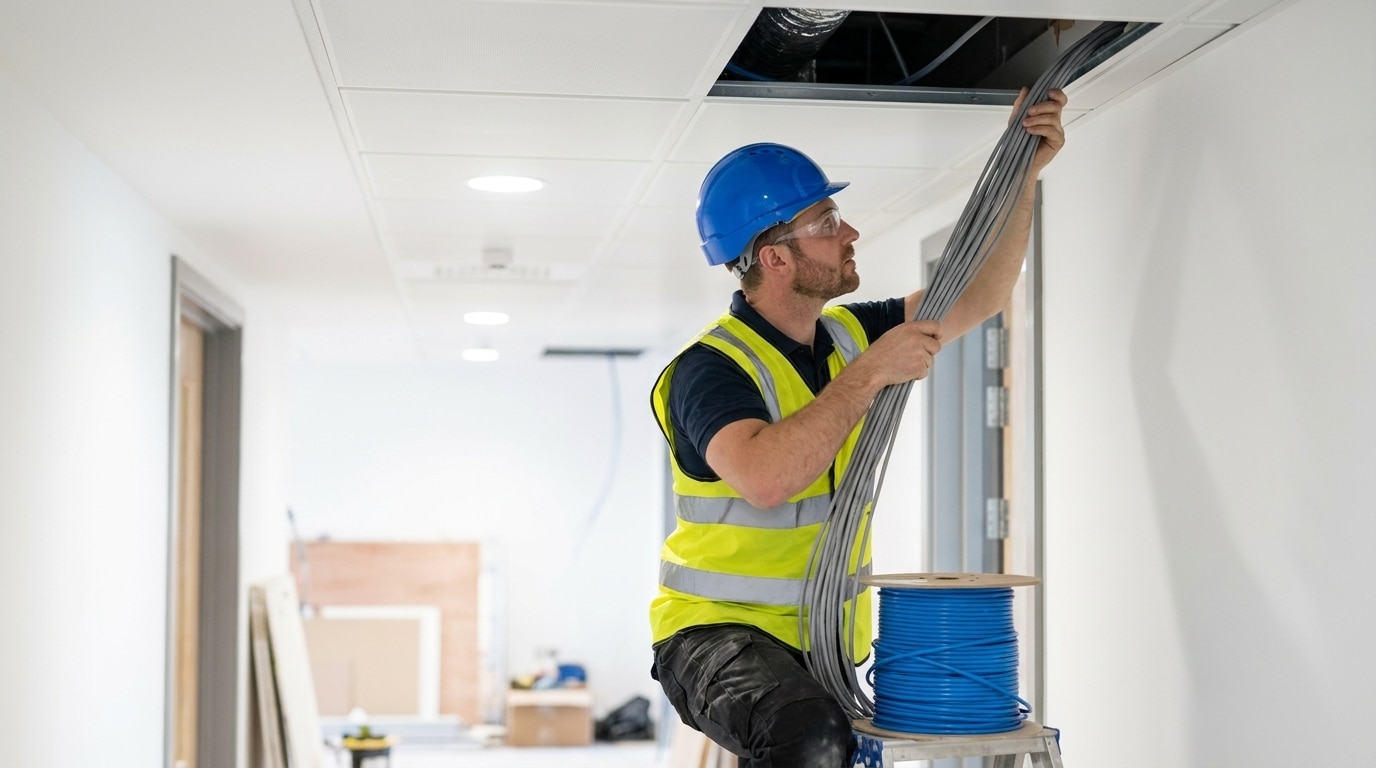
In a standard commercial rough-in, an experienced two-person installation crew can route 15 to 25 Cat6 drops per day depending on ceiling access and pathways. Standard punch-downs to patch panels and RJ45 jacks require only 5 to 10 minutes per drop during the trim phase, resulting in highly scalable, low-cost labor budgets. This repeatable process allows contractors to maintain highly predictable per-drop pricing.
Copper’s labor efficiency makes it the ideal choice for projects with tight budgets and high connection counts. Because the tools are simple and the training is standard, you’ll find more competitive bids for copper work. This accessibility keeps the total cost of copper installations within reach for most small to mid-sized businesses.
Precision Fusion Splicing and Mechanical Splicing Fees
While an automatic core-alignment fusion splicer executes the actual glass alignment and electric arc in seconds, the overall process (stripping, cleaning, cleaving, splicing, and heat-shrink protecting) averages 5 to 8 minutes per fiber strand. Despite modern equipment efficiencies, the necessity of specialized, certified technicians and expensive capital equipment (such as a $5,000 to $10,000 fusion splicer) commands a labor premium over standard copper punch-downs.
The high cost of fiber termination is offset by the unmatched durability and bandwidth the medium provides. Industrial fiber runs are commonly quoted in the $500 to $1,500+ range per run depending on distance and termination type. While the labor is more expensive, the resulting connection handles your data needs for decades.
Testing, OTDR Certification, and Compliance Auditing
To certify physical-layer compliance, contractors use specialized copper certifiers to validate Cat6 runs and verify performance parameters against ANSI/TIA-568.2-D specifications. Using industry-standard testers such as the Fluke DSX-8000 ensures that parameters such as near-end crosstalk and return loss meet passing thresholds. Given that these units require regular calibration and represent a major capital expense, certification costs are integrated into the contractor’s per-drop labor rate.
Fiber optic installations require sophisticated Optical Time-Domain Reflectometer testing to map the entire length of the fiber. Tier 1 testing measures the total loss across the run, but Tier 2 testing uses an OTDR to find specific problems. Tier 2 testing traces signal loss across every splice and connector to verify the loss budget is maintained. It’s the only way to find “micro-bends” that cause packet loss in industrial settings.
If a cable run fails testing, the subcontractor is responsible for fixing the issue at their own cost. Failed tests are almost always the result of installation problems, such as exceeding pull-tension or bend-radius limits. Detailed certification reports provide the property owner with peace of mind that the infrastructure is ready for high-speed data.
Variables That Impact Your Low-Voltage Contractor Quote
Several critical architectural variables dictate the quoting structures of low-voltage contractors. High-bay ceiling routing (such as routing cables through 30-foot warehouse rafters) requires renting aerial scissor lifts and results in slower labor rates compared to standard drop ceilings. Additionally, pathways requiring core drilling through solid masonry, concrete firewall penetrations, or structural steel elements add heavy-machinery and specialized labor hours to the initial estimate.
Fire-rated wall penetrations are highly regulated. Installers must deploy UL-listed pathway sleeves (such as EZ-Path or metallic conduits) and fill them with approved firestop putty or intumescent caulk to maintain the wall’s safety rating. A high density of firewalls dramatically increases labor time due to these compliance mandates. Furthermore, project scheduling heavily impacts pricing; while open-ceiling new construction offers maximum efficiency, retrofitting occupied, active corporate spaces often requires after-hours or weekend shifts, introducing overtime labor premiums.
Pathway containment is another major variable that facility managers often overlook during the budgeting phase. Industrial environments often require metal conduit or heavy-duty cable trays to protect wiring. These solutions add significant material and labor costs but are critical for protecting your network from damage.
Scenario-Based TCO Analysis: Office Workstations vs. Massive Warehouse Floors
Examining real-world layout types demonstrates how a project manager must balance their budget. The total cost of ownership depends heavily on the intended use of the facility and the environment. Two distinct scenarios show how cost allocation shifts based on these specific infrastructure requirements. Your budget should reflect your long-term operational goals.
Case Study Scenario A: A 150-Drop Corporate Office Facility
In a 150-drop office installation, the physical layer is almost exclusively unshielded Cat6 copper distributed from a single Main Distribution Frame. A typical breakdown of this deployment includes:
- Workstation Outlets: 150 dual-port RJ45 drops (using plenum-rated Cat6) to support desks, wall-mounted displays, and ceiling-mounted wireless access points.
- MDF Infrastructure: Standard 19-inch equipment racks housing 24-port or 48-port patch panels, with standard RJ45 patch cords connecting to enterprise-grade, non-hardened network switches.
- Fiber Integration: Limited to a 10Gb OM4 multi-mode fiber link connecting the MDF to a secondary storage array or localized firewall appliance.
By avoiding intermediate closets, active media converters, or expensive conduit pathways, the typical CapEx for this standard environment remains highly predictable, ranging from $25,000 to $45,000 depending on pathway accessibility.
Case Study Scenario B: A 500,000-Square-Foot Manufacturing Plant
A 500,000-square-foot industrial plant shifts the budget concentration from high-density workstation drops to ruggedized long-haul backbones. A typical industrial deployment includes:
- Network Backbone: Multi-strand OS2 single-mode armored fiber cabling routed from a central MDF to four separate remote IDFs positioned across the facility to stay within copper drop limits.
- Enclosure & Switch Hardware: Hardened, IP67-rated or NEMA-rated enclosures housing industrial DIN-rail PoE+ switches to support field devices in non-climate-controlled zones.
- Drop Distribution: Short, shielded Cat6A drops enclosed in EMT conduit to feed production-line PLCs, ruggedized surveillance cameras, and industrial HMI panels.
With fusion splicing fees, armored cable runs, lift rentals, and ruggedized hardware, the initial CapEx for an industrial layout of this scale typically ranges from $120,000 to $250,000+, depending on pathway complexity and containment requirements.
Optimize Your Infrastructure Costs with Suncoast Power
A balanced, properly budgeted low-voltage plan is the key to successfully scaling modern commercial operations. By using cost-effective Cat6 copper for office workspaces and robust, armored fiber-optic networks for industrial backbones, you ensure your facility remains productive. Our analysis shows that matching the physical medium to your site’s specific environmental stressors is the only way to maximize your long-term return on investment.
Suncoast Power has over 40 years of experience designing and maintaining complex electrical and low-voltage systems throughout Florida. We take pride in our ability to tackle the most complex industrial challenges with cost-effective solutions that keep businesses powered reliably. Whether you’re planning a new construction project or a major facility remodel, we have the skills and equipment to handle your structured cabling needs.
Contact us today for a customized, cost-effective infrastructure consultation to keep your business powered reliably.