


Static overhead arrays and harsh fluorescent troffers often create an environment that silently drains worker stamina in Florida office buildings. Designing commercial lighting layouts for employee health and productivity requires a precise integration of electrical engineering and circadian biology to support cognitive clarity. For Tampa businesses, Strategic lighting design goes beyond simple illumination to meet the workforce's physical and mental needs through high-performance electrical infrastructure.
Modern facilities must transition away from one-size-fits-all lighting models that ignore human physiological responses. A well-planned system incorporates circadian regulation, photometric standards, and glare reduction to create a supportive atmosphere. Together, these elements improve concentration and reduce the physical strain often associated with long office hours. This guide outlines the engineering protocols and biological requirements for a modern, productive workspace.
Biological Impacts of Workplace Lighting on Productivity
Human physiology functions best when it mimics the dynamic patterns of natural sunlight. Strategic optical design influences endocrine regulation and neurobehavioral performance by respecting these internal systems. Creating an indoor environment that reflects natural light cycles is essential to maintaining a healthy, focused workforce.
Circadian Rhythms and Melatonin Suppression in the Modern Office
The human internal clock relies on specific light signals detected by intrinsically photosensitive retinal ganglion cells. These cells contain melanopsin, which signals the suprachiasmatic nucleus to regulate the 24-hour circadian rhythm. Daylight exposure regulates the human circadian phase relative to local clock time. When these cycles are aligned, employees experience better alertness and improved cognitive function. Exposure to cooler, blue-enriched light in the morning is a powerful tool for suppressing melatonin and stimulating cortisol. Suppressing melatonin in the morning supports high workplace lighting productivity by maintaining alertness during peak hours. Specific daytime light levels help align the body’s internal timing with the external environment.
Improper spectrums or excessive evening exposure to cool light can severely disrupt sleep architecture. High-intensity blue light exposure late in the day delays melatonin onset in employees. This delay often leads to chronic fatigue and more sick days due to weakened immune responses. Maintaining a healthy office lighting scheme helps prevent these long-term health complications.
Optimized dynamic lighting systems can promote earlier melatonin onset and better sleep recovery. These systems use automated controls to advance the circadian phase and improve peripheral heat loss before bedtime. Designing these shifts intentionally supports a more resilient, energetic team.
Optimizing Visual Acuity and Mitigating Computer Vision Syndrome
Computer Vision Syndrome often manifests as eye strain, blurred vision, and headaches in screen-heavy environments. Computer Vision Syndrome can also lead to secondary musculoskeletal pain when employees lean forward to compensate for poor visibility. Professional electrical installation for office lighting ensures that fixtures are positioned to minimize reflective glare on digital displays.
A balanced lighting design manages the contrast ratios between digital screens and the surrounding surfaces. Proper contrast management minimizes the need for constant pupil adjustment, protecting long-term physical comfort and focus. The Illuminating Engineering Society suggests that average illuminance levels in offices where computer tasks predominate don’t exceed 500 lux. Keeping brightness levels in check reduces the visual workload on the eyes.
High contrast between a bright monitor and a dark background forces the eyes to work harder to process information. By equalizing the brightness of walls and desks, designers can reduce ocular fatigue. Proper light distribution keeps the visual field consistent, supporting sustained mental concentration throughout the day.
Fewer instances of dry eyes and blurred vision directly correlate with higher output and fewer errors. When the visual environment is comfortable, employees are less likely to be distracted by physical discomfort. Effective lighting layouts prioritize these ergonomic factors to ensure a sustainable working environment. Healthy office lighting helps prevent common workplace eye strain.
Essential Photometric Standards for a Healthy Commercial Lighting Layout
Quantitative engineering metrics provide the necessary foundation for a high-performance commercial lighting layout. Designing an effective plan requires calculating specific illumination levels and glare ratings, not relying on general estimates. Precise measurements ensure every zone within a building serves its intended purpose without causing strain.
Balancing Ambient Light Levels and Recommended Lux Measurements
The Illuminating Engineering Society provides clear guidelines for illuminance across different commercial zones to ensure safety and comfort. Matching the light intensity to the specific activity prevents the errors associated with poor visibility. The Illuminating Engineering Society recommends the following lux measurements as the industry standard for commercial lighting layout design:
- General circulation areas: 100 to 200 lux.
- Standard computer workstations: 500 lux.
- Demanding tasks like technical drawing: 750 to 1,000 lux.
- Low-contrast visual tasks or microscopic components: 1,000 to 2,000 lux.
Distinguish between horizontal illuminance on the desk and vertical illuminance at eye level. Vertical lux measurements serve as the true benchmark for circadian stimulation and employee health. Measuring light at 1.2 meters above the floor provides the most accurate data on biological impact. This height corresponds to the average eye level of a seated office worker.
Maintaining an average of at least 250 Equivalent Melanopic Lux on the vertical plane is a standard for healthy environments. This intensity ensures the body receives the signals needed to stay alert and productive. Proper lux distribution across both planes creates a comprehensive lighting environment that supports all aspects of office work. Effective engineering balances these visual and non-visual requirements.
Optimizing CCT and CRI for Commercial Environments
Correlated Color Temperature significantly influences the mood and energy levels of a modern commercial workspace. Alert zones benefit from neutral-to-cool white illumination between 3500K and 4500K to stimulate focus. These cooler temperatures mimic peak daylight and help maintain high energy levels in the morning and afternoon.
Restorative spaces like breakrooms and collaborative lounges thrive under warmer temperatures ranging from 2700K to 3000K. These warmer tones signal the body to relax, allowing better social interaction and mental recovery. Strategic CCT application across the facility helps define the purpose of different zones.
High Color Rendering Index ratings of 80 to 90 ensure that colors appear accurate and natural to the human eye. Accurate color perception reduces the subtle visual strain that occurs when the brain tries to correct for poor color quality. This is particularly important in areas where visual detail and aesthetic quality are priorities. A low CRI can make a space feel dull and uninviting.
High-CRI luminaires also enhance the architectural aesthetics of the office environment. This attention to detail creates a more pleasant, high-end feel for both employees and visiting clients. Professionals recommend a CRI of at least 90 for any application where color fidelity is a primary concern.
Glare Reduction Strategies and Calculating Unified Glare Rating
Optical glare in commercial buildings falls into two categories: direct and indirect. Direct glare comes from poorly positioned or unshielded light sources that shine directly into the eyes. Indirect glare reflects off surfaces such as computer screens, polished desks, or glossy flooring. Both types of glare contribute to headaches and decreased workplace productivity.
Professional office spaces should maintain a Unified Glare Rating of 19 or lower to prevent distractions. This rating system quantifies how likely a light source is to cause discomfort to a typical observer. Keeping this number low is a fundamental requirement for any ergonomic lighting design. It ensures that the lighting remains comfortable for the entire duration of a work shift.
Engineers achieve low UGR levels by using deep-recessed fixtures and micro-prismatic diffusers. These components help control light distribution and prevent high-intensity hotspots. Micro-louvers also direct light precisely where it’s needed without creating unwanted reflections. These physical shielding methods are more effective than simple dimming alone.
Indirect uplighting layouts also help by bouncing light evenly across the ceiling plane. This technique creates a soft, diffuse light that eliminates harsh shadows and reduces the risk of glare. Combining these strategies ensures a comfortable visual environment for all occupants. Proper glare control is a critical component of professional office lighting installation.
Ergonomic Lighting Design: Layering and Spatial Distribution
Ergonomic lighting design functions as a dynamic spatial practice that moves away from flat, uniform illumination. Applying the same lighting power density across an entire facility often causes visual fatigue and wastes energy. A sophisticated layout uses variety to create a more engaging and comfortable professional setting.
Layering Ambient, Accent, and Adjustable Task Lighting
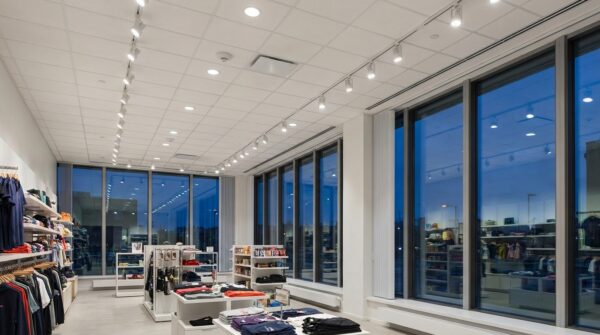
A classic three-layer approach involves ambient, accent, and task lighting to create a balanced environment. Ambient lighting provides a safe baseline of light for general navigation and overall visibility. Accent lighting introduces depth by highlighting architectural features and preventing the space from feeling monotonous. This layering mimics the complexity of natural environments. Dedicated task lighting allows for localized focus on specific desktop activities without over-lighting the entire room. Providing employees with individual dimming and directional controls has been shown to significantly increase job satisfaction. This personal agency allows workers to adjust the light to suit their specific visual needs and age-related requirements. Individual control is a key element of modern workplace lighting productivity.
Adjustable task lamps also reduce postural fatigue by letting users change the light angle. When the light is positioned correctly, employees don’t need to lean or twist to avoid shadows on their work. This flexibility supports better ergonomic habits and reduces the risk of long-term physical strain.
Integrating these three layers ensures the lighting system is both functional and aesthetically pleasing. By avoiding a flat ceiling of light, designers create a more natural and stimulating environment. This allows higher light levels where needed and lower levels in transition zones.
Harnessing Natural Daylighting and Biophilic Design Principles
Integrating natural daylighting into an ergonomic lighting design supports the innate human affinity for nature. Access to natural light patterns has been linked to improved cognitive processing and lower stress markers. Use daylight as the primary light source whenever it meets health standards. It’s the most effective way to provide the spectrum required for circadian entrainment.
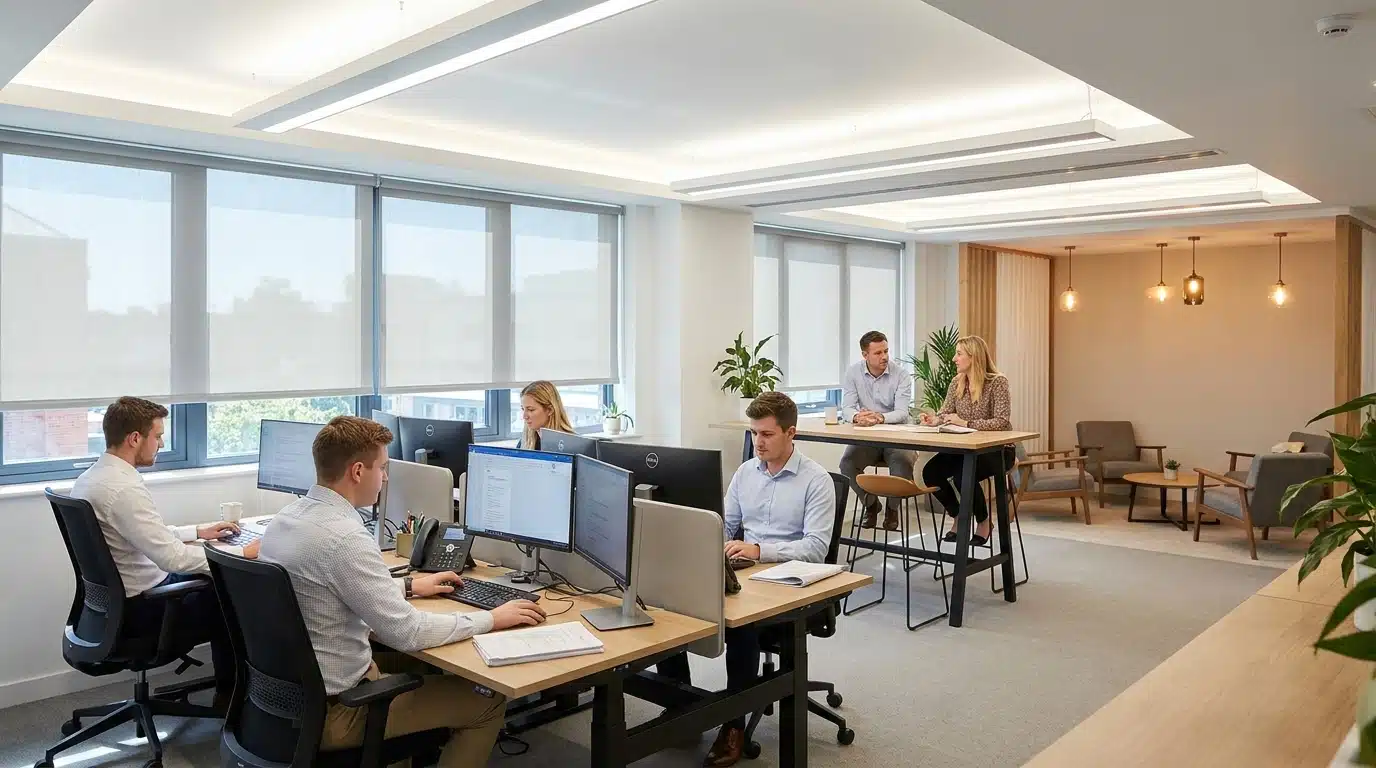
Effective engineering strategies include placing primary workstations within 25 feet of perimeter windows. This proximity ensures that employees receive enough natural light to stimulate their circadian systems. Using a light spectrum that mimics the shorter wavelengths of natural daylight also supports alertness. It helps keep the body’s internal clock synchronized with the actual time of day.
Low-emissivity glass can control solar heat gain without blocking outdoor views. This technology allows for large windows that provide biophilic benefits while maintaining the building’s energy efficiency. Automated roller shades also help manage harsh sunlight while preserving the benefits of exterior light. They prevent glare and thermal discomfort while still connecting occupants to the outside world.
Biophilic design often uses views and natural patterns to boost office morale. When employees can see the passing of the day, their bodies stay better aligned with natural cycles. This connection to the outside world is a key component of a healthy office lighting strategy. It reduces the feeling of being trapped in a static, artificial environment.
Specialized Lighting for Industrial and Warehouse Environments
Commercial lighting layout design must adapt to the unique challenges of large-scale industrial spaces and manufacturing floors. These environments require high-output, low-flicker fixtures to maintain safety and precision during long shifts. High-bay LED luminaires provide the intense illumination needed for high ceilings while maintaining energy efficiency.
Poor quality drivers in industrial lighting can cause a high flicker index, leading to stroboscopic effects. This phenomenon is dangerous around moving machinery because it can make rotating parts appear stationary or slow. Professional electrical contractors prioritize high-frequency drivers to eliminate this risk and protect machine operators from ocular fatigue. Safe lighting is a prerequisite for any manufacturing facility electrical design.
Industrial layouts often require wider beam distributions to ensure even light across expansive floor areas. Rugged fixtures with high IP ratings are necessary to withstand the dust, moisture, and vibrations common in these settings. Tailoring the layout to each zone’s specific needs maximizes both utility and safety. Proper lighting in these zones isn’t just about health; it’s a critical safety requirement.
The ROI of Lighting Retrofits for Florida Businesses
A commercial lighting layout retrofit in Tampa offers a significant return on investment through reduced energy consumption and improved maintenance cycles. Modern LED systems use up to 75% less energy than legacy fluorescent or metal halide lamps. For Florida businesses, this translates to lower monthly utility bills and a reduced load on the building’s heating, ventilation, and air conditioning system. It’s a financial hedge against rising energy costs.
Compliance with the Florida Building Code Energy Conservation requirements is required for any major renovation or new build. Professionals must manage the Lighting Power Allowance calculations required for permitting in Tampa. These calculations limit the total wattage per square foot allowed for interior illumination. High-efficacy fixtures help ensure compliance while still providing the light levels needed for worker health.
Florida-based facilities can often qualify for energy-efficiency rebates from providers like TECO or Duke Energy. These incentives help offset the initial capital expenditure of a commercial lighting layout upgrade. Beyond energy savings, improved employee health leads to higher retention and lower absenteeism. A healthy office lighting environment is a strategic investment in human capital.
Advanced Building Controls: Automating Healthy Office Lighting
Modern lighting systems require more than simple manual switches to support employee well-being. Networked lighting control systems serve as the technical link between human biology and electrical efficiency. These systems allow for a level of precision and automation that was once impossible in commercial settings.
Daylight Harvesting Sensors and Smart Dimming Protocols
Daylight harvesting systems use ceiling-mounted photosensors to monitor incoming ambient light. These sensors automatically adjust LED output using 0-10V, Digital Addressable Lighting Interface, or wireless mesh controls. The goal is to maintain a constant target lux level by supplementing natural light only when necessary.
The system dims the lights so gradually that occupants typically don’t notice the change in artificial output. This smooth transition prevents distractions from sudden brightness shifts. Advanced dimming protocols also help reduce the facility’s overall energy footprint. They ensure the building isn’t wasting power on artificial light when the sun provides enough visibility.
Using these smart controls concurrently slashes energy consumption and prolongs the lifespan of LED components. By not running fixtures at full power constantly, you reduce the heat load on the drivers and chips. This longevity lowers maintenance costs and reduces replacements over the life of the building. This longevity is a primary reason for the high ROI of networked lighting control systems.
Aligning Commercial Lighting With WELL Building and LEED Standards
High-performance lighting design often aligns with the WELL Building Standard and LEED certification for sustainability by integrating circadian lighting metrics and automated occupancy sensors. Compliance with the WELL v2 Light concept requires meeting specific Equivalent Melanopic Lux benchmarks. The WELL Building Standard mandates a minimum of 250 EML to ensure biological effectiveness for office occupants. These standards pdemonstratethe ssystem’simpact on health.
The recommended minimum for circadian health is 250 lux at the eye, measured in the vertical plane. Designers calculate this value using the formula EML = L × R to ensure the spectrum is effective. In this formula, “L” represents the visual illuminance in lux, and “R” represents the melanopic ratio of the light source. Following these technical requirements demonstrates a commitment to the long-term health of the workforce.
Adhering to these standards can increase the value of commercial real estate assets and improve Environmental, Social, and Governance performance. Investors and tenants increasingly look for buildings that prioritize occupant well-being and energy efficiency. Achieving melatonin onset through better lighting is now a measurable goal for high-performance buildings. These certifications signal quality in a competitive Florida market.
The Value of Expert Commercial Electrical Contractors in Layout Execution
Implementing a sophisticated lighting design requires the 30 years of field-verified electrical engineering experience of a professional contractor. Professionals manage complex issues like low-voltage architectural controls and phase-dimming compatibility. They also ensure the system handles power quality and prevents harmonic distortion that can damage sensitive electronics. A professional touch prevents the flickering and buzzing associated with poor installations.
Adhering to the Florida Building Code and the American Society of Heating, Refrigerating and Air-Conditioning Engineers 90.1 is necessary for legal and safety compliance. Improperly specified drivers or unbalanced electrical phases can cause imperceptible fixture flicker. This flicker can cause headaches and undermine the health benefits the architectural design intended. Using a melanopic Equivalent Daylight Illuminance benchmark ensures that the technical execution matches the biological needs of the staff.
Experienced contractors provide the necessary expertise to handle large-scale installations in warehouses and manufacturing facilities. They manage circuit load calculations and ensure that the infrastructure can support advanced smart controls. Partnering with a skilled team ensures that the final result is reliable, efficient, and healthy for every employee. Professional execution is the only way to guarantee that a commercial lighting layout performs exactly as intended.
Upgrade Your Commercial Lighting With Suncoast Power
An ergonomic commercial lighting layout improves workplace performance and lowers long-term energy costs. By focusing on circadian health, visual comfort, and smart automation, businesses can build a more resilient, focused workforce. These systems are a strategic investment in both human capital and overall facility efficiency.
Suncoast Power has spent over 40 years mastering complex electrical systems for commercial and industrial clients. We provide comprehensive services for new construction, remodels, and energy-efficient retrofits throughout Florida. Our expertise ensures your facility meets the highest standards of quality and reliability. Contact us today for an expert commercial lighting consultation and a comprehensive energy-efficiency assessment.