


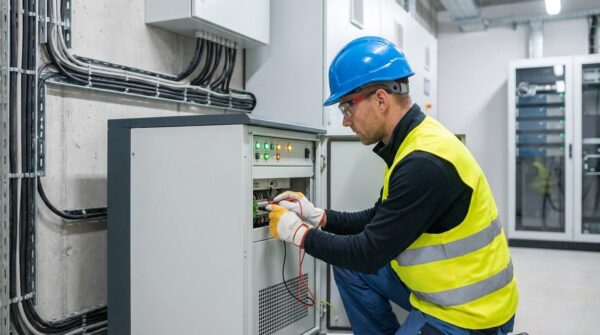


Under Florida Statute Chapter 162, an unresolved National Electrical Code violation flagged during a municipal audit or county code sweep can trigger immediate code enforcement hearings and compounding daily administrative fines for commercial building owners.
These compliance failures threaten occupant safety, create major landlord liabilities, and directly drag down commercial property valuations during transactions.
Navigating National Electrical Code Violations in Commercial Assets
Commercial electrical compliance is not a static milestone achieved during initial construction. Because the state updates the Florida Building Code and its referenced National Electrical Code standards every three years, older systems face growing compliance gaps as tenant power demands, HVAC loads, and safety technologies evolve.
What Constitutes an Electrical Code Violation in Commercial Real Estate?
In commercial real estate, an electrical code violation is any installation, wiring method, or maintenance practice that falls short of the NFPA 70 or the Florida Building Code. Common commercial infractions involve unpermitted work, improper grounding and bonding, and lack of mandatory Ground-Fault Circuit Interrupter or Arc-Fault Circuit Interrupter protection in required zones.
Under Florida Building Code Section 105.1, a building permit is mandatory before constructing, altering, repairing, or replacing any regulated electrical system. While individual permits are standard, large facilities may use FBC Section 105.1.1 to obtain an “Annual Facility Permit” for ongoing electrical maintenance, repairs, and minor system relocations. This administrative path allows facility managers to legally execute routine electrical modifications while maintaining a compliant, consolidated work log for the local building official, rather than pulling dozens of individual permits throughout the year.
Because commercial infrastructure operates under high-voltage demands and complex load profiles, inspectors frequently flag unpermitted branch circuits, missing AFCI protection in critical areas, and missing GFCI protection in wet locations or commercial kitchens. They also document grounding and bonding violations in both new work and existing distribution boards.
While the Florida Building Code establishes the statewide baseline, individual municipalities and counties enforce their own local amendments. For instance, coastal jurisdictions like Broward County or the City of Tampa enforce stricter corrosion-resistance and wind-load guidelines for outdoor electrical equipment than inland counties. Ignoring these local amendments can cause unpermitted alterations to fail routine municipal audits, requiring expensive retrofits.
Grandfather Clauses vs. Mandatory Retroactive Remediation
A common misconception in the commercial real estate sector is that grandfather clauses indefinitely shield older systems from code updates. While Florida building departments do not mandate immediate retroactive updates to existing, safe installations with every code revision, this protection is limited.
Mandatory retroactive remediation is triggered when a facility changes its occupancy classification, an inspector identifies an immediate life-safety hazard, or when renovations exceed the 50% threshold of the building’s assessed value under the Florida Building Code. For example, the statewide transition to the 2020 NEC expanded mandatory surge protection (NEC Article 242) and broader GFCI protection requirements for commercial services, meaning any major service upgrade must now absorb these added costs.
Common Triggers for Municipal Electrical Inspections
Specific events rather than random audits typically trigger local municipal inspections. Common entry points for local building officials and the Authority Having Jurisdiction include:
- Commercial Tenant Improvements: Any interior buildout or electrical remodeling requires an active permit and subsequent inspections.
- Annual Fire Marshal Surveys: Local fire marshals check for blocked electrical panels, unpermitted extension cords, and missing emergency lighting.
- Change-of-Occupancy Applications: When a building changes use, such as converting retail space into a restaurant, the entire electrical capacity must be evaluated.
- Workplace Accident Investigations: Serious shocks or electrical fires trigger immediate joint investigations by OSHA and municipal inspectors.
- Insurability Audits: Commercial insurers mandate Property Condition Assessments that audit active system compliance with FBC Chapter 27 and the adopted NEC.
Industry-Specific Compliance Challenges for Florida Facilities
Florida commercial facilities operate under brutal environmental and operational loads. For coastal properties, airborne salt spray causes rapid oxidation of copper conductors and steel enclosures. Under NEC Article 300.6, these installations require corrosion-resistant materials such as PVC-coated rigid conduit or stainless steel NEMA 4X enclosures. In the hospitality and office sectors, retrofitting high-tonnage HVAC systems to combat Florida’s extreme humidity often overloads aging 120/208V three-phase panelboards. This operational stress frequently leads to unpermitted, over-fused additions to branch circuits that fire marshals easily flag during routine sweeps.
Industrial and manufacturing plants face significant operational risks associated with motor control centers and heavy machinery grounding (NEC Article 250). Faulty bonding or poor phase balance in these high-voltage environments can result in localized arcing and equipment damage. To mitigate life-safety hazards, industrial operators must establish preventative maintenance schedules and perform arc flash risk assessments in compliance with NFPA 70E.
The Real Estate Transaction Threat: Code Discovery and Deal Failure
The transfer of property ownership is the most common point at which hidden electrical deficiencies come to light. Most commercial acquisitions involve rigorous due diligence periods where specialized inspectors scrutinize every component of the building’s infrastructure. Discovering active violations during this phase can instantly stall a high-value transaction and force a total renegotiation of the purchase price.
Commercial Real Estate Inspection Issues and Due Diligence Audits
During due diligence, qualified engineering professionals evaluate whether the building’s service capacity matches contemporary demand profile requirements. This process involves verifying that active feeder sizes, transformer layouts, and branch-circuit wiring methods align with the electrical code versions enforced by the local municipal building department.
Unlike residential transactions, where sellers have a common-law duty to disclose latent defects, commercial real estate in Florida operates under the strict doctrine of caveat emptor (buyer beware). Under Florida case law, sellers are generally not legally obligated to disclose hidden electrical deficiencies unless they actively conceal them. Consequently, buyers must execute exhaustive physical and administrative due diligence. Failure to identify outdated wiring, unpermitted panel modifications, or capacity deficits during the due diligence window leaves the buyer solely liable for all post-closing retrofitting costs.
Comprehensive due diligence audits verify the integrity of service feeders, distribution panels, and localized bonding for high-risk equipment. Commercial inspectors frequently find unpermitted modifications made by unlicensed maintenance staff, creating high-resistance connections that pose ignition hazards. Discovering these latent issues before the closing allows buyers to negotiate price adjustments, request escrow holdbacks, or require the seller to resolve the violations under a licensed contractor’s permit.
How Title Searches and Municipal Lien Audits Uncover Hidden Electrical Deficiencies
A physical inspection must be paired with an administrative compliance audit. Municipal lien searches and historical permit reviews can expose open or expired electrical permits, as well as work completed entirely without permits. While a contractor is responsible for executing work in accordance with the FBC, the property owner ultimately inherits the administrative liabilities, building department citations, and title encumbrances.
Unpermitted electrical additions discovered during a county code sweep or a property appraisal will generate mandatory correction orders. These orders are recorded as active municipal code violations, creating a cloud on the title that halts transactions. Because outstanding building department citations attach directly to the land as statutory liens under Florida Chapter 162, the buyer inherits the daily-accruing liabilities regardless of who executed the unpermitted work.
Clear permit records are vital for institutional lenders who refuse to finance assets with open or expired permits. If a historical title or municipal search reveals unpermitted modifications to a three-phase system, resolving the gap requires securing an “after-the-fact” permit. This process involves hiring a licensed electrical contractor to perform a retroactive inspection, produce engineered as-built drawings, and certify that the installation meets current FBC standards.
Price Devaluation, Escrow Holds, and Transaction Collapse
When code violations are discovered late in the transaction process, the financial consequences are usually immediate and severe. Buyers typically demand steep price reductions that far exceed the actual cost of the physical repairs to account for the risk. In many cases, a commercial lender will refuse to fund the loan until a certificate of compliance is issued.
Commercial real estate inspection issues directly impact loan approvals and the asset’s overall valuation. Title insurance underwriters may also mandate expensive escrow holdbacks if they identify outstanding municipal liens related to electrical issues. These funds are set aside to ensure the necessary retroactive work is completed, which ties up the seller’s capital for months.
A collapsed transaction leads to wasted due diligence fees, legal costs, and a loss of market momentum. The seller is then left with a stigmatized asset, and any active municipal liens will remain on the public record, requiring resolution before any future buyer can secure title insurance or financing.
How Florida Statute 162 Governs Electrical Code Fines and Penalties
Under Florida Statute Chapter 162, local code enforcement boards have statutory authority to impose substantial administrative liens on commercial assets. Ignoring a formal Notice of Violation initiates an administrative prosecution process that continues to accrue compound financial penalties until a certified correction is recorded.
Daily Accumulating Fines and Municipal Penalty Structures
Florida Statute 162 governs the process by which municipal code enforcement boards assess penalties for building violations. When an inspector finds a violation, they provide a reasonable time for the owner to correct the issue before a hearing. If the violation continues past the deadline, the board can impose daily fines that accrue until a certificate of compliance is recorded.
Under Florida Statute Section 162.09, a code enforcement board can levy fines up to $250 per day for a first violation and up to $500 per day for repeat violations. However, in jurisdictions with a population of 50,000 or more, these statutory maximums escalate dramatically to $1,000 per day for first violations and $5,000 per day for repeat offenses. If the local inspector deems the electrical violation irreparable or irreversible, the board can impose a one-time flat fine of up to $15,000 per violation.
These daily penalties can quickly become five-figure liens that attach to the property and accrue interest over time. Local governments record a certified copy of the fine-imposing order in the public records, which then functions as a lien against the land. If the lien remains unpaid for more than three months, the local government has the right to foreclose on the property to recover the debt.
Unpermitted Work Liabilities and Double-Permit Penalties
When unpermitted electrical work is discovered, local building departments automatically assess a double-permit fee as an immediate administrative penalty. Furthermore, under Florida Statute Section 489.531, hiring unlicensed handymen or using in-house, non-licensed maintenance staff for major electrical installations constitutes a misdemeanor. The Department of Business and Professional Regulation can issue cease-and-desist orders and levy administrative fines of up to $5,000 per violation against both the unlicensed contractor and the property owner who hired them.
Additionally, Florida Statute Section 553.80 mandates a punitive fee of four times the original permit review cost if a local building department rejects a design professional’s plans three times for the same code deficiency. A similar four-times-the-cost penalty applies if a municipal inspector must make repeated site visits to verify the same uncorrected electrical issue.
Remediating unpermitted work is highly destructive. Municipal inspectors frequently order owners to strip back drywall, drop ceilings, or core-drill concrete to visually inspect hidden conduits, conductors, and junction boxes. This invasive diagnostic process multiplies remediation costs and triggers substantial tenant business-interruption and rent-abatement claims.
Legal Liabilities Under Florida Law: Civil Actions and Tenant Suits
The risks of electrical non-compliance extend far beyond municipal fines and administrative hurdles. Commercial property owners face extensive personal and corporate liability when a known code violation contributes to an injury or property damage. In a litigious environment, a failure to maintain safe systems can lead to devastating civil judgments.
Private Causes of Action Under Florida Statute 553.84
Under Florida Statute Section 553.84, any person or tenant damaged by a building code failure has a private cause of action against the party who committed the violation. Under recent statutory amendments, passed via HB 85/Chapter 2023-22, liability is restricted to “material violations.”The statute defines a material violation as a building code deficiency in a completed facility that “may reasonably result, or has resulted, in physical harm to a person or significant damage” to the building’s systems. An uncorrected commercial electrical hazard, such as an ungrounded high-voltage service or an overloaded distribution board, easily meets this materiality standard. This strips away key legal defenses, leaving owners exposed to devastating statutory damages if an electrical fire or arc flash occurs.
The financial consequences of a judgment under Section 553.84 include direct remediation costs, compensation for property damage, lost business revenues, and potentially the plaintiff’s legal fees. Establishing a proactive, documented electrical maintenance program is a critical risk-management step to prove due diligence and defeat claims of negligent maintenance.
Landlord-Tenant Liability and the Cost of Workplace Accidents
Commercial landlord-tenant agreements typically allocate maintenance duties, but landlords generally retain structural and main-service electrical liabilities. If a noncompliant service entrance panel or primary feeder fails, damaging a tenant’s industrial equipment or server stacks, the landlord faces significant breach-of-contract and tort claims for business interruption. These failures often trigger constructive eviction claims, lease terminations, and costly civil litigation.
Workplace safety standards enforced under OSHA 29 CFR Part 1910, Subpart S, impose strict regulatory requirements on employers and property managers to maintain safe working clearances and hazard-free electrical components. If a tenant’s employee suffers an injury traced to neglected primary infrastructure, both local authorities and OSHA can conduct investigations leading to joint civil liability. Additionally, maintaining workplace electrical safety in accordance with the 2024 edition of NFPA 70E requires routine arc-flash risk assessments to protect personnel and insulate owners from catastrophic liability.
Third-party lawsuits from injured contractors or visitors can result in settlements that exceed the limits of standard liability insurance policies. When a building owner is found to have willfully ignored a notice of violation, they may even face punitive damages.
A Facility Manager’s Guide to Responding to a Notice of Violation
Receiving an official electrical citation requires immediate, structured action to halt compounding daily fines and protect your asset from statutory liens. Facility managers should execute this four-step response protocol:
- Verify and Document the Citation: Thoroughly review the physical Notice of Violation to identify the specific section of the Florida Building Code or local municipal ordinance that was cited, and note the exact deadline to prevent daily fines from accumulating.
- Retain a Licensed Specialty Contractor: Hire a qualified commercial electrical contractor to conduct an immediate electrical risk assessment and diagnose the root cause of the citation.
- Secure Permits and Execute Remediation: Ensure the licensed contractor pulls all necessary municipal electrical permits before starting work and that all physical repairs comply with the 2020 National Electrical Code.
- Schedule Municipal Reinspection: Coordinate with the local Authority Having Jurisdiction (AHJ) to inspect and approve the repairs, ensuring the building inspector formally closes out the permit and removes the violation from the public database.
The High Cost of Remediation: Retrofitting Outdated Electrical Systems
Resolving legacy code violations involves physical and operational coordination to ensure the remediation process does not disrupt business continuity. Because commercial systems supply critical machinery, continuous HVAC loads, and sensitive servers, retrofitting active environments requires planned shutdowns, temporary generation systems, or complex dual-feed switchover procedures.
The Logistics and Expense of Active Commercial Remediation
Retrofitting outdated electrical systems in a functioning warehouse, shopping center, or airport is a major logistical challenge. The work often requires scheduled downtime and the use of temporary power systems to keep critical business functions running during the service upgrade. Contractors must navigate around existing tenants, which can slow down the pace of work and increase total labor costs.
Physical retrofits are categorized into service-entrance upgrades, distribution panelboard replacements, and branch-circuit remediation. A full-scale retrofit may involve replacing high-amperage current transformers, rebuilding three-phase distribution systems, and running rigid metal conduit through highly finished office spaces or concrete structural slabs, adding significant coordination costs to the project.
Top Violations Requiring Immediate Action
Certain physical violations pose such severe life-safety risks that they require emergency, immediate remediation:
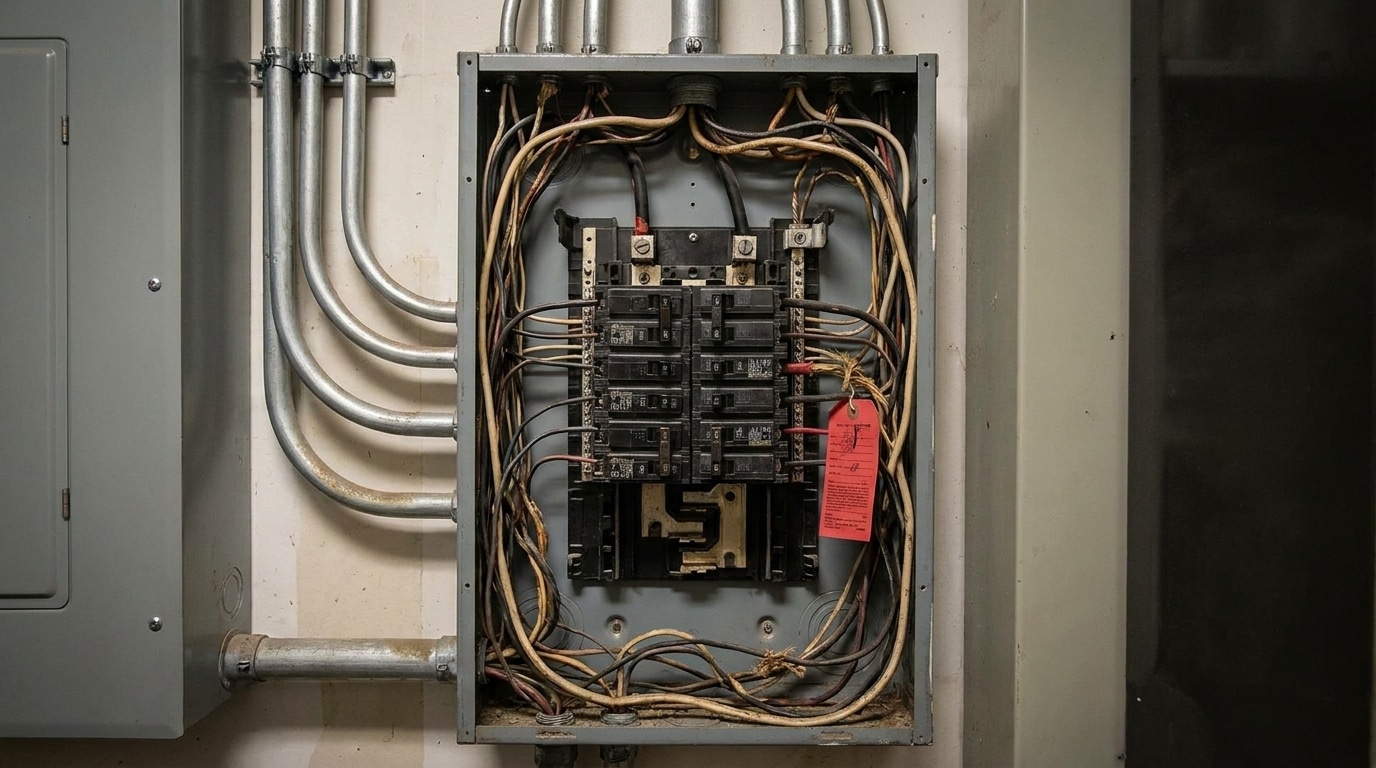
- Obsolete and Recalled Panelboards (FPE, Zinsco, Challenger): These vintage distribution boards frequently fail to trip during overcurrent events. Forensic engineering studies show Federal Pacific Stab-Lok breakers suffer failure-to-trip rates exceeding 20% under test conditions. The Florida State Fire Marshal identifies these un-tripped overloads as leading causes of commercial building fires.
- Improper Working Space Clearances (NEC Article 110.26): Using dedicated electrical rooms for janitorial supply storage or inventory overflow is a widespread infraction. The NEC mandates an absolute clearance zone in front of all service equipment: a minimum of 36 inches deep, 30 inches wide, and 6.5 feet high. Blocking these enclosures with stock boxes or cleaning carts results in immediate citations from the municipal fire marshal.
- Defective Grounding and Bonding (NEC Article 250): Poor neutral-to-ground bonding or high-resistance grounding pathways can leave metal enclosures energized, posing fatal shock risks. Because these defects rarely disrupt normal operation, they usually go unnoticed until a power surge destroys downstream IT assets or an electrician uses infrared thermography to locate severe hot spots inside the panelboard enclosure.
Operational and Insurance Risks: Catastrophic Failures and Denied Claims
Strict code compliance is a prerequisite for operational reliability and comprehensive liability protection. Neglecting routine electrical maintenance or ignoring known system warnings dramatically increases the risk of catastrophic equipment failures and structural fires. Beyond the direct threat of physical destruction, the subsequent administrative and insurance liabilities can jeopardize an organization’s financial solvency.
The true cost of an electrical service interruption is measured by operational downtime and compromised data integrity, rather than by physical component costs. An uncorrected, minor NEC violation can cause localized switchgear failure that halts industrial assembly lines or disables server rooms. For high-demand commercial assets such as distribution warehouses, cold storage facilities, and airports, even a brief power outage can result in catastrophic financial losses.
Transient voltage surges caused by improper grounding can destroy industrial automation systems, variable frequency drives, and medical equipment, with lead times extending into months. While standard property policies may cover some physical replacements, business interruption costs are rarely fully compensated. Maintaining a system that meets the National Electrical Code is a fundamental risk-mitigation strategy for commercial operations.
Florida’s Commercial Property Insurance Difficulties
Florida’s commercial property insurance market has hardened significantly, with carriers intensifying their scrutiny of aging electrical infrastructure. Insurers frequently mandate detailed Property Condition Assessments that specifically audit panel service life, wiring insulation material, and total system capacity. Properties operating with obsolete distribution panels, unpermitted subpanels, or multi-wire branch circuits with shared neutrals are often flagged as high-risk, leading to coverage exclusions or policy non-renewals.
When an underwriter identifies unresolved NEC violations, the carrier may impose severe premium surcharges or refuse to bind coverage. In some instances, insurers draft policy endorsements with specific exclusions for losses arising from known, noncompliant systems. If a structural fire is traced back to an unpermitted electrical modification that the policyholder failed to remediate, the carrier has legal grounds to deny the property damage claim entirely, exposing the owner to complete loss.
Schedule A Code Compliance Review with Suncoast Power
The legal, financial, and operational risks of non-compliance with commercial electrical regulations in Florida underscore the necessity of proactive, professional oversight. From compounding daily code fines to collapsed real estate transactions and potential insurance claim denials, the costs of deferred maintenance far exceed the investment required to secure proper permitting and execute standard-compliant installations.
Suncoast Power leverages over 30 years of experience designing, permitting, and maintaining reliable commercial electrical systems across Florida. Our team of state-licensed specialists navigates the nuances of the Florida Building Code and local municipal guidelines to resolve existing violations and prevent future liabilities. Contact us today to schedule a comprehensive code compliance audit and secure your facility’s long-term operational integrity.